
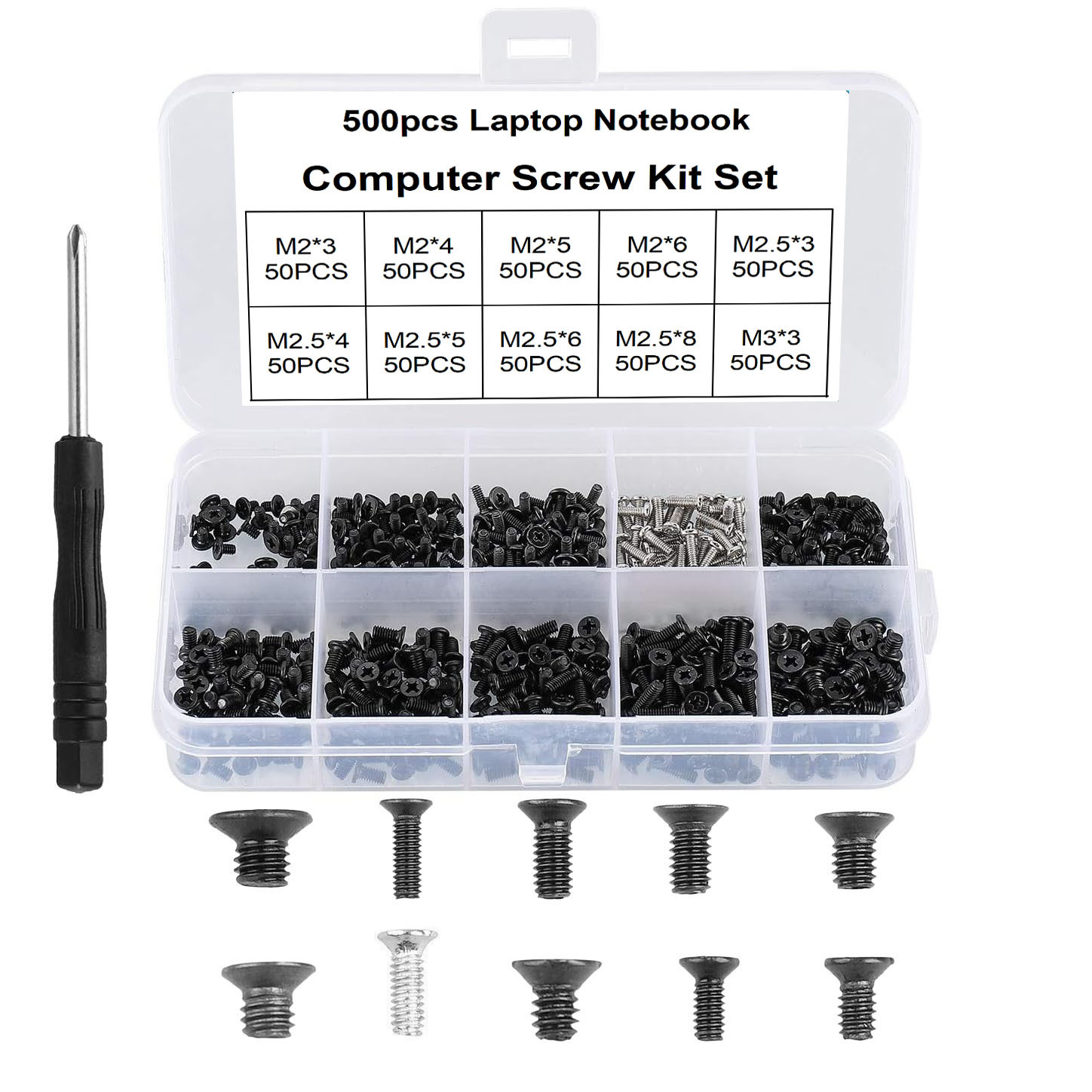
What Are Tiny Screws for Electronics?
Tiny screws, usually between M1 (about 1mm across) and M3 (around 3mm), serve as those little but crucial fasteners that hold together all sorts of compact electronics. Made mostly from stuff like stainless steel, titanium, or brass, these tiny bolts need to be strong enough without adding unnecessary bulk or rusting over time. Because they're so small, they fit into tight spots where bigger hardware just wouldn't work, making them indispensable for things like printed circuit boards, sensor assemblies, and even delicate optical equipment where every millimeter counts.
Common Types of Micro Screws Used in Consumer Devices
Three primary types dominate modern electronics:
- Set screws: Secure knobs or gears in wearables and medical instruments
- Machine screws: Anchor display panels in smartphones and tablets
- Self-tapping screws: Fasten plastic housings in hearing aids and IoT devices
Thread-forming screws are increasingly used for polymer components, while captive screws support quick-disassembly designs—reflecting growing repairability demands in consumer electronics.
The Importance of Precision Screws in Device Assembly
Picking the wrong screws can cause serious problems down the road. Small fasteners tend to strip out when exposed to constant vibrations, while mixing different metals creates corrosion issues over time. According to research published last year in precision engineering journals, around two thirds of early product failures actually come from either incorrect tightening forces or components not being aligned properly. Industries where accuracy matters most, think aerospace manufacturing and medical devices, demand really tight tolerances sometimes as small as plus or minus 0.05 millimeters. These specs apply to everything from tiny drone motor parts all the way up to life saving equipment like heart pacemakers. Today most factories rely on special thread locking compounds and computer controlled tightening tools during automation processes just to maintain those crucial clamp pressures consistently across production runs.
Key Applications of Tiny Screws in Modern Devices
Miniature Screws in Smartphones and Wearables
The tiny screws ranging from M1.4 down to M0.6 play a big role in putting together smartphones and wearable gadgets. They hold everything together securely including those fragile screens, delicate circuit boards, and sensitive sensor arrays. A recent report from Mobile Engineering in 2024 found that almost all high end phones now rely on these miniature fasteners for their most important connections. This has allowed manufacturers to shave off about 20 to maybe even 30 percent off the overall thickness of devices without making them any less sturdy. For waterproof wearables like fitness trackers, makers frequently turn to titanium screws instead. These special screws create watertight seals around internal parts but don't add much extra bulk to the device either.
Tiny Screws in Medical Devices and Hearing Aids
In medical technology, biocompatible materials like 316L stainless steel and PEEK plastic are essential for surgical robots, hearing aids, and implants. Titanium screws under 2mm in diameter have become standard for pacemaker housings and endoscopic tools due to their corrosion resistance and MRI compatibility.
Micro Screws in Aerospace and Defense Systems
Aerospace engineers rely on lightweight titanium and aluminum screws (M1.2–M2) for satellite guidance systems, drones, and avionics. These fasteners reduce weight by up to 60% compared to conventional options while meeting MIL-SPEC standards for vibration resistance. Self-locking threaded designs are increasingly adopted to prevent loosening in extreme environments.
How Miniaturization Trends Are Increasing Demand for Tiny Screws
We've seen an amazing surge in tiny hardware components lately, with demand for screws below 2mm growing by almost 40% since last year according to Global Fastener Insights data. The tech world just can't stop shrinking things these days. Foldable smartphones, those little internet-connected sensors everywhere now, they all need super small fasteners. Manufacturers across different sectors have started relying on standard specs such as JIS B 0203 and DIN 916 because everyone wants parts that fit together without headaches. And guess what? This obsession with miniature parts means fastener companies are scrambling to develop better thread locking solutions and create drive systems compatible with tools like Torx T3 through T5 sizes. After all, nobody wants their product falling apart when assembled at microscopic scales.
Where to Buy Tiny Screws: Top Suppliers and Sourcing Options
Best Online Retailers for Tiny Screws
B2B platforms like Zoro and Grainger offer extensive inventories with filters for thread pitch (M1.2–M3), material (stainless steel, brass), and drive type (Torx, Phillips). For prototyping, McMaster-Carr provides 1–2 business day shipping on over 500 micro-fastener SKUs, though bulk pricing becomes less competitive beyond 1,000 units.
Specialized Distributors for Precision Screws in Electronics
Medical manufacturers depend on ISO 13485-certified suppliers such as TFC Precision for biocompatible titanium M1.4 screws with controlled surface roughness (Ra ≤ 0.8 µm). Aerospace contractors often source from AS9100D-certified distributors offering cadmium-plated micro screws compliant with MIL-SPEC-81705 corrosion resistance standards.
Top US Suppliers of Tiny Screws for OEMs and Repair Shops
| Supplier Type | Capabilities | Key Features |
|---|---|---|
| Aerospace-focused | Custom micro-fasteners | Military-spec compliant |
| Medical-grade specialist | ISO 13485 certified production | Biocompatible materials |
| Global supplier | Extensive inventory management | Multi-region logistics support |
The 2024 Global Sourcing Guide notes that regional suppliers now achieve 48-hour turnaround on custom micro screws using advanced CNC Swiss machining.
Global Sources for Bulk Purchases of Micro Fasteners
Shenzhen-based manufacturers lead the Asian market, offering MOQs as low as 50,000 pieces with unit costs dropping 18–22% at volumes above 100,000. However, Turkish and Eastern European producers are gaining traction through automated cold-forming systems capable of achieving ±0.005 mm tolerances on M1.2 screws.
Technical Factors in Selecting and Using Tiny Screws
Material Options: Stainless Steel, Titanium, and Brass for Tiny Screws
Material choice significantly affects performance. Stainless steel (grades 304/316) offers strong corrosion resistance, ideal for medical devices undergoing sterilization. Titanium provides a 40% better strength-to-weight ratio, making it suitable for aerospace. Brass excels in electrical conductivity—critical for grounding; one 2023 study showed brass fasteners reduce electrical resistance by 62% compared to steel.
Thread Sizes and Drive Types in Precision Screw Selection
Thread pitch and drive style directly impact installation reliability:
| Factor | Smartphone Use | Industrial Use |
|---|---|---|
| Common Thread Pitch | M0.6–M1.2 (0.125 mm) | M1.4–M2 (0.3–0.4 mm) |
| Preferred Drive Type | Phillips 000 | Torx T2 |
JIS-standard Phillips heads remain common in consumer electronics for tamper resistance, while Torx drives handle higher torque in industrial robotics.
Torque and Tooling Best Practices for Installing Micro Screws
A 2023 industry study revealed that 68% of micro-screw failures result from incorrect torque application. Technicians should use precision torque drivers (0.04–0.15 Nm range) with non-magnetic tips to avoid interfering with sensitive electronics. For screws under 1mm, vacuum pickup tools help prevent handling errors during placement.
Avoiding Common Handling Mistakes with Tiny Screws
Three key issues account for 82% of assembly problems according to quality reports:
- Storage: Anti-static containers are essential—improper storage increases contamination risk fivefold
- Tool Matching: Using a #000 driver on a #00 screw damages the head in 94% of cases
- Magnification: Operators using 10x magnification reduce cross-threading errors by 73%
Leading OEMs now integrate automated vision systems to verify proper thread engagement in high-volume production.
Future Trends in Tiny Screw Technology and Manufacturing
Innovations in Precision Manufacturing of Micro Screws
Laser micro-machining now achieves tolerances below 0.05 mm, enabling next-generation microelectronics. Additive manufacturing allows custom geometries for aerospace parts requiring extreme durability, with 2024 industry reports showing a 37% reduction in production waste versus traditional CNC methods. AI-powered inspection systems detect sub-micron defects, enhancing quality control for medical-grade fasteners.
Smart Fasteners and IoT Integration Possibilities
Screws fitted with sensors that track things like torque, heat levels, and stress are now moving into their prototype phase. Market research from around 2026 suggests there could be something like seven hundred forty million dollars worth of business for these connected fasteners as various sectors start using smart screws for maintenance ahead of time in areas such as robot manufacturing and intelligent buildings. The tiny bolts send out information through what's called BLE technology, which stands for Bluetooth Low Energy. This allows engineers to tweak settings on the fly in expensive equipment where precision matters most, think medical imaging devices or space exploration hardware.
Sustainability Challenges in Tiny Fastener Production
Miniaturization complicates recycling—62% of micro-screws under M1.2 are lost during e-waste processing (2023 materials study). Manufacturers are exploring polymer alternatives and closed-loop titanium recycling to reduce reliance on virgin metals. However, durability concerns persist, keeping brass and stainless steel as preferred choices for mission-critical applications despite higher environmental costs.
FAQ
Why are tiny screws important in electronics?
Tiny screws are crucial for securing components in compact electronic devices where precision and minimal space usage are essential. They provide strength without adding bulk.
How do tiny screws improve modern electronic devices?
They allow devices like smartphones and medical equipment to be compact and durable, enabling the reduction of device thickness while ensuring strong connections.
What materials are commonly used for tiny screws?
Common materials include stainless steel, titanium, and brass, each offering specific benefits such as corrosion resistance and electrical conductivity.
Where can I buy tiny screws for electronics?
You can purchase from online retailers like Zoro and Grainger or specialized distributors that provide precision screws depending on your requirements.
Table of Contents
- What Are Tiny Screws for Electronics?
- Common Types of Micro Screws Used in Consumer Devices
- The Importance of Precision Screws in Device Assembly
- Key Applications of Tiny Screws in Modern Devices
- Where to Buy Tiny Screws: Top Suppliers and Sourcing Options
- Technical Factors in Selecting and Using Tiny Screws
- Future Trends in Tiny Screw Technology and Manufacturing
- FAQ