
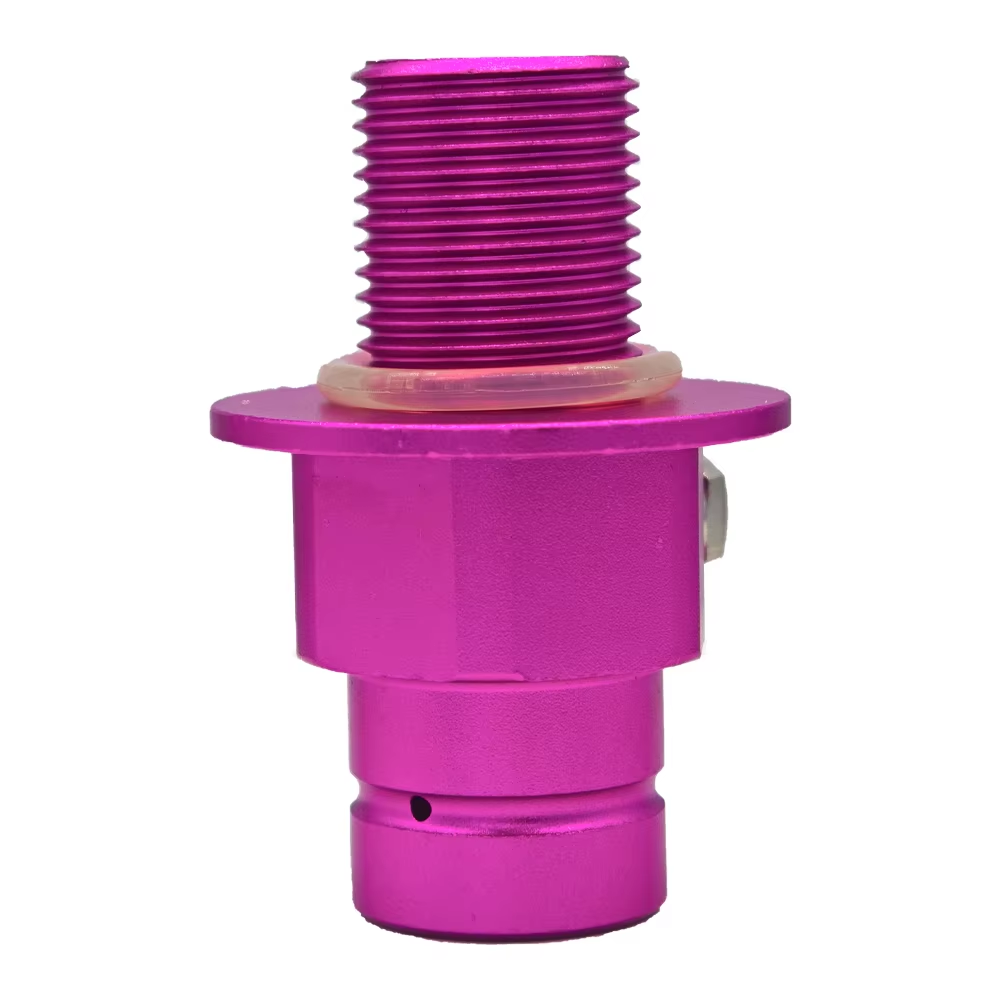
How Soda Water Adapter Enables Reliable, Customizable Home Carbonation
Core Function: Bridging CO₂ Sources to Carbonation Devices
The soda water adapter acts as the main connection point between CO2 sources and those carbonation gadgets we all know. What makes it so useful is that it lets people take those fancy proprietary cartridges and hook them up to regular food grade CO2 tanks ranging from 5 to 20 pounds. No more being stuck buying expensive brand specific stuff. According to some industry numbers from last year, folks who switch over typically cut their annual gas costs by anywhere between half and three quarters compared to sticking with cartridges. The adapters come with precision machined fittings that keep everything sealed tight, whether someone is working with old paintball tanks or bigger commercial cylinders. When businesses start using these adapters, they basically turn those small capacity carbonators into something much more sustainable and refillable while still keeping all the safety features intact and maintaining proper pressure levels throughout.
Precision Pressure Control and Gas Flow Optimization
Advanced soda water adapters feature dual-stage regulators that maintain a stable 45–55 PSI output—exceeding stock systems’ 30 PSI limitations. This granular control allows customization based on beverage viscosity:
- Lower pressure (35–40 PSI) for thick liquids like juices
- Higher pressure (50–55 PSI) for rapid water carbonation
Adjustable flow valves prevent over-pressurization and flavor distortion—the leading cause of DIY carbonation failure (Home Beverage Safety Study 2024). Integrated pressure gauges and relief valves enable real-time monitoring, while food-grade hoses ensure contamination-free gas transfer. This precision turns carbonation into a repeatable science—not guesswork.
Soda Water Adapter Cost Savings vs. Commercial Refills
People who love carbonated drinks save a lot of money when they switch from those expensive CO2 canisters to bulk tanks with a simple soda water adapter. The price difference is pretty dramatic actually. Regular canisters run around 38 cents per liter, but going bulk brings that down to just 18 cents per liter according to Hackaday's research. That means almost half the cost! No more buying those cartridges every few months for $15 to $30 each time. Instead folks are opting for industrial strength gas tanks that cost between $30 and $40 for a 20 pound container. Makes sense really since most home users don't need all that fancy equipment anyway.
Direct Cost Comparison: SodaStream Cylinders vs. Paintball/CO₂ Tank Setups
The financial advantage becomes clear when examining consumption patterns:
| System | Cost per Liter | Annual Cost (500L) | Key Limitations |
|---|---|---|---|
| Proprietary Canisters | $0.38 | $190 | Frequent replacements |
| Bulk Tank + Adapter | $0.18 | $90 | Higher initial setup cost |
Bulk systems require a $35–$150 adapter investment but reduce carbonation expenses by 40–60%. Households consuming 1,000 liters annually save approximately $200—offsetting adapter costs within 3–6 months.
Break-Even Analysis and Long-Term Value Over 12–24 Months
Long-term savings compound significantly after the break-even point:
- Months 0–3: Adapter investment absorbed ($50–$80 average)
- Month 6+: Cumulative savings reach $90–$130
- Year 1: $240–$380 saved vs. cartridge-only usage
- Year 2: Total savings exceed $500 with minimal refills
Environmental benefits accompany these economics: bulk systems reduce plastic waste by 86% and shipping emissions by 75% per liter. Industry surveys indicate 63% of adopters cite cost reduction as their primary motivation Beverage Tech Survey 2023.
Soda Water Adapter Compatibility and Integration Flexibility
The core value of a soda water adapter lies in its universal compatibility, enabling enthusiasts to leverage nearly any CO₂ source with their carbonation system. This seamless integration supports diverse setups through three key methods:
- Ball-Lock Keg Systems: Directly connect to commercial-grade kegs using standard ball-lock fittings, bypassing proprietary cylinder designs.
- PET (Polyethylene Terephthalate) Bottles: Safely interface with reusable PET containers common in homebrewing, maintaining pressure integrity during carbonation cycles.
- Standard Regulator Systems: Adapt to generic CO₂ regulators via common CGA-320 or S-Type threads, allowing integration with industrial gas tanks or paintball canisters without specialized hardware.
This cross-platform design eliminates ecosystem lock-in, ensuring long-term system viability as your carbonation needs evolve.
Safety, Reliability, and Best Practices for Soda Water Adapter Use
Getting those ASTM B-62 and NSF/ANSI 372 certifications matters because they actually tell us whether a soda water adapter can handle what it's supposed to. Most commercial models rarely fail since they're built with precise machining techniques and come equipped with pressure relief valves as standard features. On the flip side, homemade systems pose serious dangers. Testing shows around one out of every five DIY setups has carbon dioxide leaks, while between 15 to 25 percent operate beyond safe pressure levels. Before starting up any system, check if it works within the recommended range of 45 to 55 pounds per square inch for most carbonation devices. Monthly inspections are smart too, applying some food grade sealant where pipes connect. Don't forget to swap out O-rings once a year or so to stop unwanted gas escaping. And absolutely stick to the manufacturer's safety guidelines. Tinkering with things outside these specs will likely void warranty coverage, something service claims data from 2024 backs up pretty strongly.
FAQ
What is the primary function of a soda water adapter? It serves as the main link between CO2 sources and carbonation gadgets, allowing for the use of common CO2 tanks instead of proprietary cartridges.
What pressure is ideal for most carbonation setups? Recommended pressures are generally between 45 to 55 PSI for effective carbonation.
How do cost savings compare between using a soda water adapter and proprietary canisters? Switching from proprietary canisters to a bulk tank and adapter setup can reduce costs by up to half, saving hundreds annually.
How does using a soda water adapter benefit the environment? It decreases plastic waste by 86% and reduces shipping emissions by 75% per liter.
Table of Contents
-
How Soda Water Adapter Enables Reliable, Customizable Home Carbonation
- Core Function: Bridging CO₂ Sources to Carbonation Devices
- Precision Pressure Control and Gas Flow Optimization
- Soda Water Adapter Cost Savings vs. Commercial Refills
- Direct Cost Comparison: SodaStream Cylinders vs. Paintball/CO₂ Tank Setups
- Break-Even Analysis and Long-Term Value Over 12–24 Months
- Soda Water Adapter Compatibility and Integration Flexibility
- Safety, Reliability, and Best Practices for Soda Water Adapter Use
- FAQ