
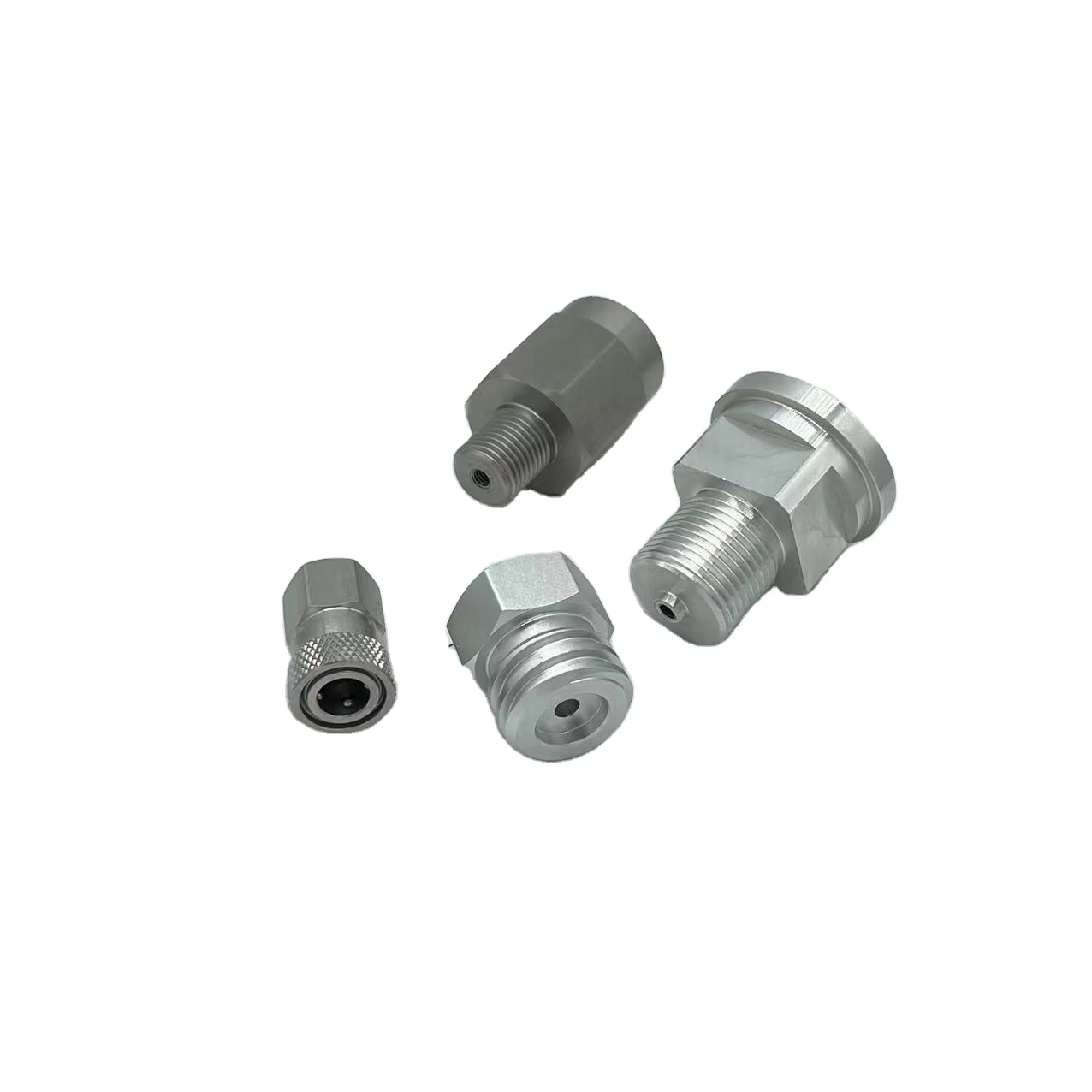
Precision and Repeatability: The Foundation of CNC Machining Efficiency
Tight tolerances (±0.005 mm) enabling first-pass conformance in high-precision mechanical parts
CNC machining today gets really precise measurements thanks to better calibration methods, keeping things within about plus or minus 0.005 mm for important mechanical parts. The level of accuracy means most shops don't need those extra machining steps anymore. Around 9 out of 10 times when tight tolerances matter, this saves money and materials too. Waste drops by roughly 17%, and products get to market faster. These machines have built-in systems that check dimensions as they cut, adjusting automatically when tools start wearing down. Even after making hundreds of parts, the machine stays accurate at the micron level. That's why manufacturers can produce complicated items like hydraulic valves or optical mounting hardware right the first time without needing rework.
Statistical process control validation: <0.1% dimensional deviation across 10,000-part aerospace batches
In aerospace manufacturing, companies rely on statistical process control or SPC to check if their CNC machines are staying consistent. When making batches of 10,000 titanium actuator parts, they typically see dimensional changes under 0.1%, which is pretty impressive given the materials involved. The whole operation keeps tabs on around 27 different factors at once, stuff like how much the spindle heats up over time and those tricky vibrations during cutting. All this helps maintain stable processes while meeting those strict AS9100 requirements. What makes this system so valuable? Well, it cuts down on quality checks by roughly one third compared to traditional methods. Plus, all that machining data gets turned into early warning signals for maintenance needs. This means problems with tolerances can be caught before they actually break anything important. For parts that literally hold planes together, having this kind of repeatable precision isn't just nice to have it's absolutely necessary when there's no room for error whatsoever.
Automation and Reduced Human Intervention in CNC Machining Workflows
42% faster setup and 68% fewer operator-induced defects through integrated CNC automation
Automation systems are changing how CNC machines operate, swapping out manual tasks for robots and smart programming that just works better. With advanced robotics handling parts and AI software doing the thinking, setup times drop by around 40% thanks to automatic calibration of tools, quick fixture swaps, and programs that adjust themselves on the fly. At the same time, these setups cut down defects caused by human error by almost two thirds. When workers aren't manually loading parts or taking measurements, there's far less variation between products. The whole system keeps checking itself through feedback loops, maintaining tight tolerances of plus or minus 0.005 mm throughout entire production runs. This means experienced techs can spend their time actually checking quality instead of fixing problems, and factories stay running nonstop day after day without interruption.
Smart Optimization of Cutting Parameters and Tooling for Mechanical Parts
Adaptive machining: 22–35% cycle time reduction without sacrificing surface finish or part integrity
Adaptive machining works by taking live sensor readings and changing things like feed rates, spindle speed settings, and how deep the tool goes into material. This helps shorten production cycles anywhere from about 20% up to maybe 35%, all while keeping the surface quality intact and the part structurally sound. When tools don't bend as much and there's less heat generated during cutting, parts stay dimensionally stable even when working on complicated shapes. Factories see fewer rejected parts and save on electricity costs too. The bottom line is better productivity without sacrificing quality standards, which makes sense for shops producing large quantities of precision parts where both time and money matter most.
High-feed tooling + optimized G-code: 29% titanium part cycle time improvement in real-world production
When manufacturers combine high feed rate tooling with properly optimized G-code programming, they often see around a 29% improvement in cycle times when working with titanium components in actual aerospace manufacturing settings. The high feed tools allow for more aggressive cutting without causing vibrations that damage the workpiece. At the same time, better programmed G-code gets rid of those unnecessary air movements between cuts and creates more efficient cutting paths across the material. Together these approaches mean faster material removal from the workpiece, longer lasting cutting tools, less stress on the machine during operation, and better surface finish along with more accurate dimensions. As an added bonus, this combination typically means fewer secondary operations are needed after initial machining, which helps get finished parts out the door much quicker than traditional methods would allow.
Multi-Axis CNC Machining: Minimizing Waste and Secondary Operations
When it comes to material savings, multi-axis CNC machining really stands out because it can cut from multiple angles at once. We're talking about cutting down on wasted materials by somewhere between 18 and 27 percent when compared to older techniques. Getting rid of all that manual repositioning not only speeds things up but also stops those pesky alignment mistakes that end up creating scrap. The integrated tool paths give surfaces a much better finish than standard methods, often getting down to Ra values under 0.8 microns. That means companies might not need to do any extra polishing or grinding work after the fact. Take something complicated like turbine blades for instance. With single setup 5-axis machining, there's no build up of measurement errors across different fixtures, so dimensions stay accurate within 0.01 mm without needing fixes later on. All told, this approach eats up about 22 percent less energy per part made and shortens production time by as much as 40%. No wonder more shops are turning to CNC machining as they look for ways to run their operations leaner and greener.
FAQ
What are tight tolerances in CNC machining?
Tight tolerances in CNC machining refer to the precise measurements that parts must achieve, typically within ±0.005 mm, ensuring high accuracy and minimal need for additional machining steps.
How does statistical process control help in CNC machining?
Statistical process control helps maintain dimensional stability across large production batches by continuously monitoring various factors, leading to reduced quality checks and timely maintenance alerts.
What role does automation play in CNC machining workflows?
Automation in CNC machining reduces setup time and operator-induced errors by relying on robotics and AI for processes, leading to tighter tolerances and continuous operation without manual interruption.
How does adaptive machining optimize production?
Adaptive machining uses live sensor data to adjust parameters like feed rates, reducing cycle time significantly while maintaining surface quality and part integrity.
What benefits do multi-axis CNC machines offer?
Multi-axis CNC machines minimize waste and secondary operations by cutting from multiple angles, resulting in better surface finishes and reduced energy consumption.