
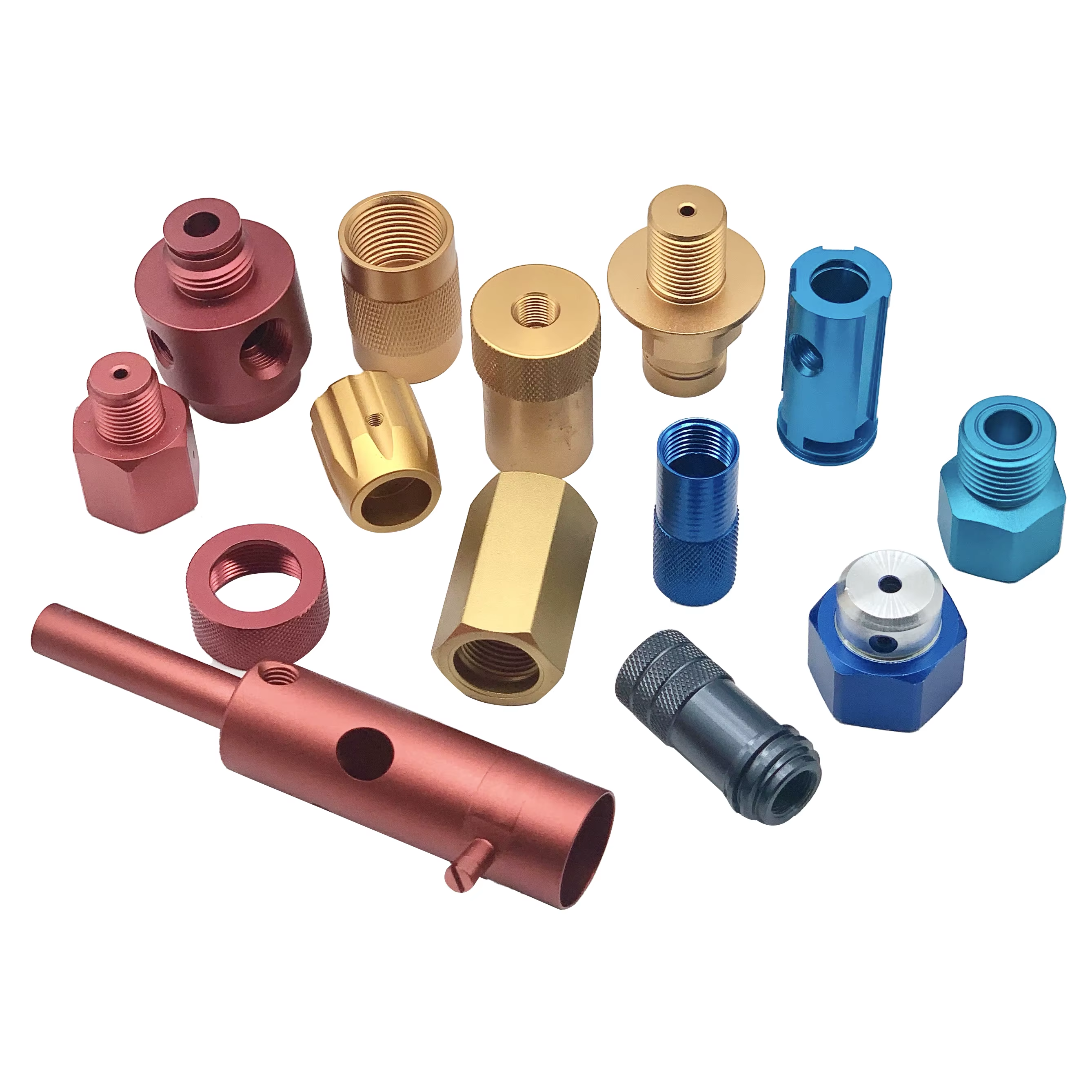
Material Hardness and Its Impact on Tool Wear and Surface Integrity in CNC Machining
The Hardness–Tool Wear–Surface Finish Chain Reaction
The hardness of materials measured using Brinell Hardness (HB) has a big impact on how well CNC machines perform. When working with harder materials, the cutting tools wear out much faster, which means their edges start to break down quicker than normal. As these cutting tools lose their shape over time, tiny flaws get transferred onto the finished product's surface. For materials above HB 250, this can actually make the surface roughness (Ra) jump anywhere from 25% to 40%. What happens next is even worse for manufacturing quality. The worn tools create more force during cutting and generate extra heat in specific areas. This leads to what's called subsurface work hardening and makes parts gradually shift dimensions. This matters a lot in aerospace manufacturing where tolerances are extremely tight and surface finish requirements simply cannot be compromised at all.
Empirical Evidence: Tool Life Reduction Across Common Hardness Ranges (HB 100–350)
The lifespan of cutting tools doesn't decrease in a straight line as material hardness increases. When working with materials harder than HB 250, carbide tools tend to wear out somewhere between 40 and 60 percent quicker compared to when they cut softer metals. Looking at actual test results shows this effect clearly: at HB 150 materials, tools last around 120 minutes before needing replacement, but that drops dramatically to about 45 minutes when dealing with HB 320 materials, all other conditions being equal. Constantly replacing worn tools adds to production expenses and creates problems with part dimensions too. Measurements often drift beyond acceptable tolerances, sometimes going past the ±0.05mm range on important components, which can really impact quality control efforts.
| Hardness Range (HB) | Avg. Tool Life (min) | Surface Roughness (Ra μm) |
|---|---|---|
| 100–150 | 150+ | 0.8–1.2 |
| 151–250 | 90–120 | 1.3–2.0 |
| 251–350 | 35–50 | 2.5–3.8 |
Source: Machining Performance Database 2023
These findings support targeting hardness bands of HB 150–220 where machinability and functional performance converge. For hardened steels beyond this range, adaptive strategies—including feed rates ≤0.1 mm/rev and cryogenic cooling—are essential to interrupt the wear–heat–hardening feedback loop.
Thermal Conductivity’s Role in Heat Dissipation and Dimensional Stability During CNC Machining
How Poor Thermal Conductivity Causes Workpiece Distortion and Tolerance Drift
When metal meets cutting tools, friction creates serious heat problems right at the contact point. Materials like titanium alloys that conduct heat poorly (below 20 W/m·K) struggle to shed this heat effectively, leading to temperature surges sometimes reaching over 600 degrees Celsius. What happens next? Thermal expansion becomes uneven across the workpiece. Just think about it: a mere 50 degree difference across 100 millimeters of material can twist aerospace grade metals by anywhere from 0.05 to 0.12 millimeters. These tiny distortions build up over time, eventually knocking tolerances out of spec beyond the acceptable ±0.025mm range. Thin walled components face particular challenges because heat tends to pool in these areas, creating internal stresses that make parts warp after machining is complete. To combat these issues, shops need to implement comprehensive cooling strategies along with tool paths that account for thermal effects during operation.
Aluminum vs. Titanium: Contrasting Thermal Profiles and Their CNC Machining Implications
| Property | Aluminum (6061) | Titanium (Grade 5) | Machining Impact |
|---|---|---|---|
| Thermal Conductivity | 167 W/m-K | 6.7 W/m-K | Aluminum enables ~3× higher feed rates due to efficient heat dissipation |
| Thermal Expansion | 23.6 μm/m-°C | 8.6 μm/m-°C | Titanium’s lower expansion partially offsets distortion but demands peck drilling and shallow cuts |
| Heat Concentration | Low | Extreme | Titanium requires pulsed or cryogenic cooling to prevent cratering and work hardening |
These contrasting profiles necessitate fundamentally different CNC strategies. Aluminum supports aggressive parameters—spindle speeds above 3000 RPM—making it ideal for high-volume production. Titanium, by contrast, requires conservative speeds (70–130 RPM), real-time thermal monitoring, and precision coolant delivery to maintain dimensional fidelity in critical applications.
Microstructural Consistency and Mechanical Properties as Determinants of CNC Machining Precision
The internal architecture of a material critically defines its response to machining forces. Inhomogeneities—whether compositional, grain-related, or phase-based—trigger unpredictable deformation, compromising dimensional accuracy and surface consistency. Rigorous material vetting is therefore foundational to precision CNC outcomes.
Inclusions, Grain Boundaries, and Their Effect on Surface Finish Uniformity
When it comes to machining, hard spots like carbides along with those rough grain boundaries tend to concentrate stress points during the cutting process. This leads to all sorts of problems including uneven material deformation which creates those annoying chatter marks, tiny tear outs on surfaces, and can make surface roughness measurements fluctuate by as much as 60 percent when compared to materials with uniform microstructure. Studies indicate that if manufacturers refine their grain structures down to ASTM level 5 or better, they actually see about a 35 percent improvement in surface quality for finished tool steels. And this matters because it cuts down significantly on expensive post processing steps needed for precision parts where every micron counts.
Tensile Strength, Ductility, and Chip Control in Tight-Tolerance CNC Machining
The way materials form chips during machining depends heavily on their tensile strength and how much they can stretch before breaking. Materials that are super strong tend to fight against deformation, creating broken up chips that mess with surface quality. Take something like hardened steel for example it just won't bend easily. On the flip side, really soft metals such as annealed copper create long, stringy chips that get tangled around cutting tools. These sticky chips can boost cutting forces anywhere from 18 to 25 percent depending on conditions. For best results, most shops look for materials with moderate ductility around 12 to 14 percent elongation. These materials break apart nicely without compromising part dimensions. When this happens, burrs shrink by about half in parts needing tight tolerances (like +/- 0.01 mm). Less burring means fewer hours spent cleaning up parts after machining, and overall better consistency across production runs.
Comparative CNC Machining Performance Across Key Material Families
Material selection shapes CNC outcomes across three primary families—metals, plastics, and composites—each presenting distinct trade-offs between machinability, structural performance, and process reliability.
| Material Family | Machinability | Key Strength | Primary Limitation | Common Applications |
|---|---|---|---|---|
| Metals | Moderate-High | Structural integrity and thermal stability | Accelerated tool wear in hard alloys (e.g., stainless, hardened steels) | Aerospace, automotive, medical implants |
| Plastics | High | Design flexibility, low tool wear, rapid prototyping | Susceptibility to heat-induced warping and creep under load | Enclosures, jigs, functional prototypes |
| Composites | Variable | Tailored strength-to-weight and stiffness ratios | Fiber delamination, inconsistent surface finish, tool wear from abrasives | UAV frames, satellite components, high-performance sporting goods |
Getting good performance means making sure materials match what they need to do beyond just looking at strength numbers or price tags. Take stainless steel for example it holds up well against harsh environments but wears down cutting tools pretty fast. Nylon parts are easy to make when weight matters but can't handle much stress or pressure. When working with precision CNC machines, operators have to consider how materials behave under heat, their internal structure stability, and how they react mechanically during machining as well as after installation in real world applications. The right material choice makes all the difference between successful manufacturing runs and constant headaches down the line.
FAQ Section
What is Brinell Hardness (HB)?
Brinell Hardness (HB) is a scale used to measure the hardness of materials, indicating how resistant a surface is to indentation or deformation.
Why does material hardness affect CNC machining performance?
Harder materials lead to faster tool wear and can cause surface roughness, tool wear, and dimensional instability due to increased forces and heat generation during machining.
What strategies can be used to mitigate the impact of thermal conductivity in CNC machining?
Implementing cooling strategies and adjusting tool paths can help manage heat-related distortions in materials with poor thermal conductivity.
How does material microstructure influence CNC machining precision?
Material inhomogeneities like inclusions and grain boundaries can cause uneven deformation and surface finish issues, affecting machining precision.
Table of Contents
- Material Hardness and Its Impact on Tool Wear and Surface Integrity in CNC Machining
- Thermal Conductivity’s Role in Heat Dissipation and Dimensional Stability During CNC Machining
- Microstructural Consistency and Mechanical Properties as Determinants of CNC Machining Precision
- Comparative CNC Machining Performance Across Key Material Families
- FAQ Section