
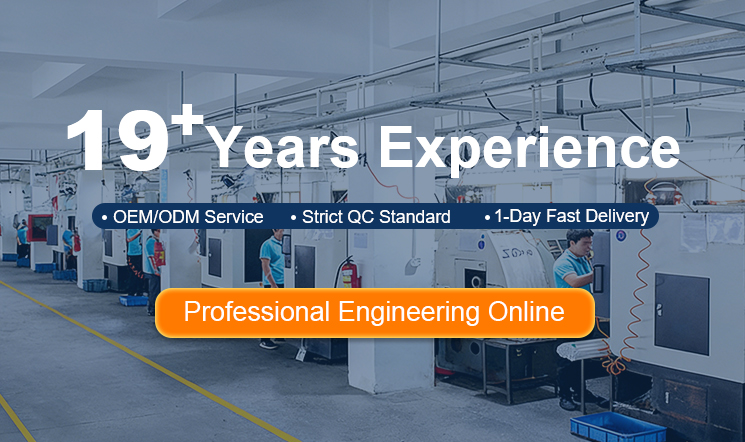
Technical Machining Capabilities Aligned with Your Part Complexity
Precision Equipment, Certifications, and Process Validation for Consistent Tolerance Control
Today's machining requirements call for machines that can hold tight tolerances around ±0.010 inches even when working with complicated shapes. Modern multi-axis CNC centers come packed with features like linear guides, precision ball screws, plus thermal management systems built right in. These components work together to reduce material distortion and make it possible to produce detailed parts reliably. Certifications such as AS9100 or ISO 9001 definitely show a company cares about quality standards, but what really counts is seeing how well they perform in practice. Look at their statistical process control results instead. Partners who regularly hit a Cpk above 1.33 demonstrate they actually have control over those important measurements day after day. Keeping machines properly calibrated remains essential, especially since tools naturally wear down over time. Monitoring this wear in real time combined with closed loop compensation helps keep parts within spec during long production runs without unexpected dimensional changes creeping in.
Early-Stage Engineering Support (DFM) and Collaborative Machining Planning
Design for Manufacturability or DFM analysis done early in the process can cut down on how many prototypes need to be made, sometimes saving around 30% of the usual iterations by spotting problems before any metal gets cut. Smart manufacturers bring their DFM knowledge to the table from day one, looking at blueprints and making sure walls are thick enough, avoiding tricky undercuts, setting proper draft angles, and picking materials that work well both for what they need to do and how easy they are to machine. Working together on plans helps set up common rules about tracking where materials come from, checking key dimensions that matter most, and creating fixtures that can handle different volumes as needed. Teams that develop products side by side using the same CAD and CAM tools tend to communicate better, so when designs get complicated, they become manageable and actually cost less to produce. This means products hit the market faster, matching up with what companies want to achieve with their overall development schedules.
Robust Quality Systems That Ensure Production Stability at Scale
Beyond ISO 9001: How Quality Maturity Predicts Long-Term Machining Reliability
Getting ISO 9001 certification is definitely important as a starting point, but what really matters for lasting reliability is how mature an organization's quality culture actually becomes. The best machining partners don't stop at basic compliance though. They implement all sorts of predictive control measures these days, things like real time statistical process control monitoring, those automated correction systems that kick in when something goes off track, plus regular meetings where different departments come together to discuss quality issues. Companies that adopt this approach tend to see around a quarter to thirty percent fewer defects than shops relying solely on end of line inspections. Third party auditors check everything regularly while process capability studies keep showing Cpk values above 1.33 most of the time. This kind of vigilance works wonders even when dealing with super tight tolerances down to plus or minus 0.005 inches, tricky materials that are hard to work with, or last minute design changes from engineers. When manufacturers stick to this proactive mindset, they avoid those costly problems that pop up right before delivery and maintain their precision standards no matter if they have to switch materials mid project, deal with engineering updates, or scale production quickly.
Proven Consistency Across High-Volume Runs: From Prototype to 10,000+ Machined Parts
Scalable precision requires integrated quality protocols—not just sampling. The most capable suppliers layer assurance methods across volume phases:
| Volume Phase | Quality Assurance Mechanism | Outcome |
|---|---|---|
| Prototype (1–50) | First-article inspection (FAI) | Validates initial GD&T alignment |
| Mid-volume (500+) | Automated in-line metrology scans | Detects dimensional drift in real time |
| High-volume (10k) | Layered process audits + full traceability | <0.5% defect escape rate |
These partners combine statistical sampling (per AQL standards) with digital traceability—often blockchain-enabled—to ensure every part, from lot one to lot 10,000, meets identical surface finish, geometric, and functional specifications—eliminating downstream assembly risk.
Trust-Building Communication and Partnership Alignment
Good communication and shared responsibility are what really make machining partnerships work well over time. When there are clear ways to share project status, regular check-ins for feedback, and written plans for handling problems, everyone stays on the same page during complicated manufacturing processes that have many steps. Digital tools that track things like product quality, how far along projects are, and whether specifications are met give all parties immediate access to information so they can make decisions together. Putting down exactly who does what, how conflicts get resolved, and other important details in contracts called SLAs helps avoid day-to-day frustrations. According to recent data from supply chain experts, companies that build these open practices into their relationships see around 23% fewer delays in production. What starts as simple business transactions often turns into something much better - collaborative efforts where both sides can innovate together.
Supply Chain Resilience Through Vertical Integration and Scalable Machining Capacity
In-House Capabilities and Capacity Flexibility as Risk Mitigation for Critical Machining Projects
When companies bring more control in house, their supply chains become much more resilient, particularly in sectors where precision matters most such as aerospace manufacturing and medical device production. Managing everything from where materials come from right through heat treatments, CNC work, quality checks, and putting it all together means manufacturers aren't so reliant on outside vendors anymore. They can get products out faster too and respond better when things go wrong in the supply network. What's really interesting is how this setup helps scale operations quickly. Going from small test runs to making tens of thousands of parts becomes possible without losing track of those tiny measurement tolerances or damaging surfaces during processing. Having top notch CNC machines onsite along with schedules that bend when needed and tooling systems that adapt makes all the difference. Companies end up delivering reliable results even when market conditions swing around unexpectedly.
FAQ
What is CNC machining?
CNC, or Computer Numerical Control, machining is a process used in manufacturing where pre-programmed software and code control the movement of production equipment.
Why is tolerance control important in machining?
Tolerance control is crucial to ensure that parts are manufactured to the precise measurements required for them to function correctly.
What is Design for Manufacturability (DFM)?
DFM is a design process that considers manufacturing constraints and capabilities to optimize the ease and cost-efficiency of production.
How does vertical integration benefit supply chain resilience?
Vertical integration allows companies to control various stages of production, reducing reliance on external suppliers and increasing response time in case of disruptions.