 EN


Why splitting the prototype shop and the production shop quietly wrecks programs
A pattern shows up in hardware post-mortems with almost boring regularity. The prototype runs beautifully at a quick-turn job shop. Ten pieces come back, the team assembles them, everything fits, and the design gets signed off. Then the file gets handed to a production house for the first real batch, and the trouble starts. Holes that lined up perfectly on the bench suddenly need a reamer. A surface finish that looked consistent now has visible tool marks. The tolerance stack-up that passed in the lab fails on the line.
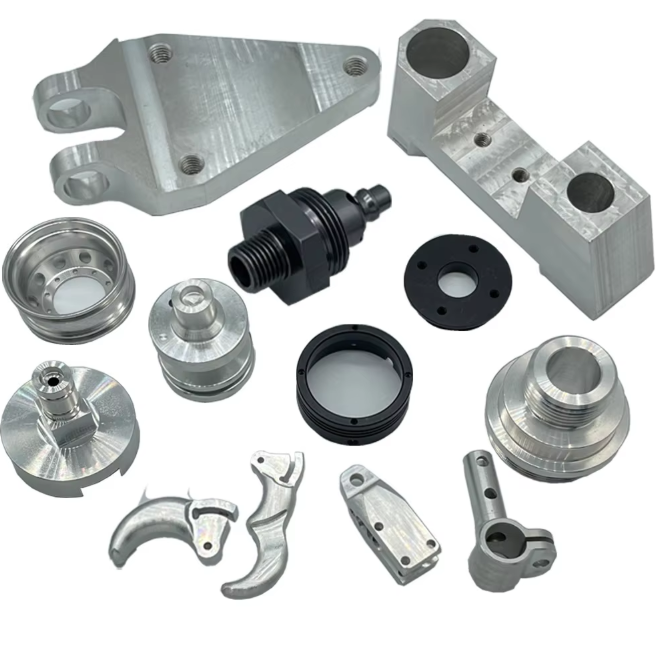
None of this is exotic. It is the predictable result of moving a part between two shops that never shared a process plan, a fixture strategy, or a quality baseline. A custom CNC parts manufacturer that keeps prototyping and volume production under one roof removes that seam. The same people who made the first three pieces are the ones who write the CAM program for the thousandth. The same inspection logic carries over. The learning curve does not reset.
What “under one roof” actually has to mean on the floor
Plenty of suppliers claim end-to-end capability. The claim is easy to make and harder to verify. The real question is whether the equipment, people, and quality system that handle a five-piece prototype order are the same assets that will run a recurring production schedule.
A practical way to test this is to look at three layers. First, the machine floor: does the shop run general-purpose 3-axis and 4-axis mills alongside dedicated production cells, or does it outsource anything beyond a certain volume? Second, the programming side: is the CAM team that supports prototypes also responsible for production toolpaths, or are those handed to a separate department with different priorities? Third, inspection: a prototype shop often relies on a first-article check and a caliper walk-around, while production needs a documented in-process sampling plan with traceability to the batch.
A supplier that genuinely integrates both modes will usually have a visible handoff protocol. Prototype feedback feeds directly into the production DFM review. Fixture concepts from the prototype run become the starting point for production workholding. The tolerance callouts get revisited with actual machining capability data, not just drawing defaults.
The NPI gate that separates a smooth ramp from a painful one
New Product Introduction frameworks typically break the journey into concept, design, prototype, pilot, and production. The prototype phase is where the design gets proven in the intended material, and the pilot phase is where the process gets proven at a modest but representative scale. The gate between those two phases is where most of the risk lives.
A common mistake is treating the prototype as a one-off curiosity and the pilot as a simple repeat with a larger quantity. In reality, the pilot exposes variability. Cycle times drift. Tool wear changes the dimensions on the last part of the batch. Material batches behave slightly differently. A supplier that only does prototypes tends to treat those as nuisances. A supplier that only does production tends to treat the prototype as a formality before the “real” work begins. The integrated shop treats the pilot as the bridge, and its process documentation reflects that.
One more gate matters: design freeze. Once geometry, material, and tolerances are locked, changes downstream become dramatically more expensive. Published NPI guidance puts the multiplier in the range of five to ten times the cost of a change made earlier in the cycle. A single-roof supplier can flag a freeze-readiness issue during the prototype run, while the fix is still a drawing revision rather than a production rework.
Tolerance strategy is where prototype habits become production liabilities
Prototype drawings often carry a default tolerance block and a handful of tightly toleranced features that mattered for the bench test. Production drawings inherit those numbers, and the shop inherits the cost. ISO 2768-1 exists precisely to keep this sane. It defines general tolerance classes for linear and angular dimensions, with fine, medium, coarse, and very coarse levels, and the fine class on small features sits at roughly ±0.05 mm while the medium class on common sizes runs around ±0.1 mm. Tightening beyond what the assembly actually needs adds machining time and inspection burden without adding function.
An integrated supplier can do something a split arrangement cannot: compare the drawing tolerance against the actual process capability observed during the prototype and pilot runs, then propose a tolerance map before the production PO is cut. In one industrial equipment program, a bracket that had been prototyped at a general ±0.1 mm default was later discovered to have only one truly critical bore spacing. The rest of the features could relax to a coarser class. The production quote dropped noticeably, and the assembly fit did not change. That kind of adjustment only happens when the person reviewing the production drawing has seen the part come off the machine.
The cost curve looks different once the same shop owns both phases
Unit price falls sharply as quantity rises, but the shape of the curve is often misread. Setup and programming are batch-level costs. Going from a single piece to a small batch can cut per-unit cost by roughly a third to half, while moving from a hundred pieces to several hundred yields only a modest additional decline because machining time and material cost per part stay relatively flat. The sweet spot varies by part complexity and material, but the flattening is real.
The comparison table below captures where the split-shop and single-roof models diverge across the program, independent of any specific price list.
| Program phase | Split prototype shop + production shop | Single-roof prototype-to-production supplier |
|---|---|---|
| First 3 to 5 parts | Fast, but process data stays local to the prototype vendor | Fast, with process data carried into production planning |
| Pilot batch | Fixture and CAM strategy rebuilt from scratch; tolerance assumptions often copied from the prototype drawing | Fixture and CAM strategy evolved from the prototype; tolerance assumptions checked against observed capability |
| Volume ramp | Quality baseline must be re-established; incoming inspection burden shifts to the buyer | Quality baseline and inspection plan continue from pilot; traceability stays intact |
| Engineering change | Buyer coordinates two schedules and two sets of feedback | One engineering contact closes the loop between design, prototype, and production |
| Cost visibility | Quote comparisons are fragmented across vendors and batch sizes | Cost drivers are visible across the whole volume curve, including the flattening point |
The table is not an argument that every program needs a single supplier. It is an argument that the coordination cost of a split arrangement is easy to underestimate, especially when the part has tight interfaces or a regulated end-use.
Where a single-roof model stops making sense
Honesty matters here. A shop that runs prototypes and production under one roof is not automatically the right answer for every program. If the annual volume climbs into a regime where dedicated high-speed lines or a completely different process family, such as casting or forging, becomes the rational choice, a CNC-focused integrated supplier may not be the long-term home. The same applies when the part design is still in heavy flux and the priority is maximum iteration speed on a handful of units, with no production commitment in sight.
The model works best when the program has a real intention to scale, the part geometry is stable enough to benefit from process continuity, and the interface count is high enough that a tolerance drift between two shops would be costly to chase. It also works when the buyer values a single quality record more than the absolute lowest quote at each individual batch size.
For teams walking that middle path, HXJ is worth a look. The shop has been in the CNC machining space since the mid-2000s and runs a vertically integrated flow from R&D through production and delivery. Its full inspection process and intelligent production line handle both prototype and volume work, and the experience base spans precision components for demanding sectors such as aerospace and medical devices. That combination of continuity and inspection discipline is exactly what a single-roof selection decision is supposed to buy.
Table of Contents
- Why splitting the prototype shop and the production shop quietly wrecks programs
- What “under one roof” actually has to mean on the floor
- The NPI gate that separates a smooth ramp from a painful one
- Tolerance strategy is where prototype habits become production liabilities
- The cost curve looks different once the same shop owns both phases
- Where a single-roof model stops making sense