
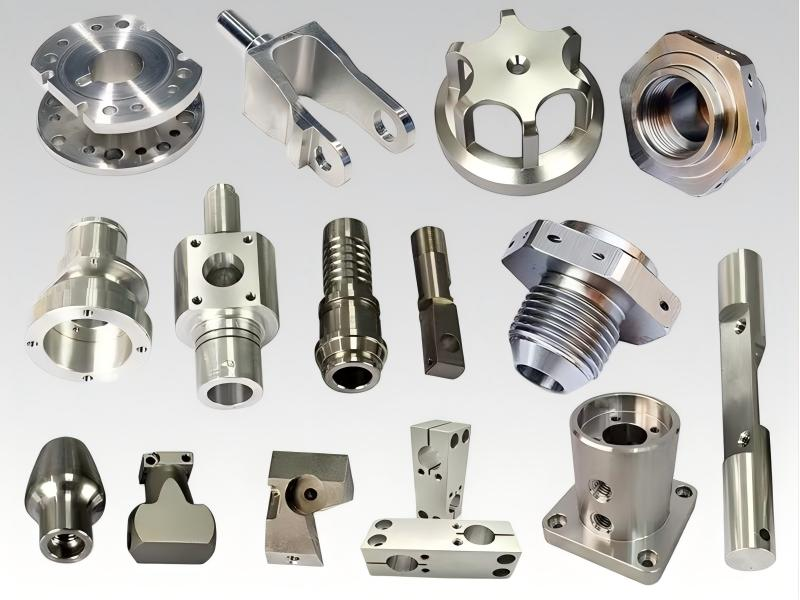
Definition and Core Capabilities of Micro CNC Machining
Micro CNC machining refers to a type of computer controlled manufacturing where parts can be made with incredible detail down to around 10 microns wide, which is roughly one tenth the thickness of a single strand of human hair. What sets this apart from regular CNC work is the equipment involved. The tools here measure under 0.1mm across, spindles spin at speeds reaching 60 thousand revolutions per minute, and special software adapts during the cutting process. These machines handle everything from metal alloys to various plastics and even some ceramic materials. They're particularly good at making those really complicated shapes needed in things like tiny holes for surgical devices or extremely thin walls required in advanced aerospace components.
Precision Manufacturing of Miniature Parts: How Micro CNC Stands Out
Traditional CNC machines have trouble handling anything smaller than about 0.1mm tolerance, but micro CNC can hit those really tiny specs down to 1-5 microns. That's why so many medical device makers rely on this technology when crafting things like surgical tools and those tiny valves used in lab equipment. What makes micro CNC work so well? Well, it actually watches what's happening during the cutting process and adjusts on the fly. The system keeps track of issues like when the cutting tool starts to bend under pressure or when heat causes materials to expand slightly. Take insulin pumps for example. Getting that ±2 micron precision right matters a lot because if the seals aren't perfect, patients could end up with faulty devices that either leak medication or fail to deliver the correct dose at all.
Comparison Between Micro CNC and Conventional CNC Machining
| Factor | Micro CNC | Conventional CNC |
|---|---|---|
| Typical Tolerance | ±1–5 microns | ±0.1–0.5mm |
| Tool Diameter | 0.01–0.5mm | 3–25mm |
| Key Applications | Medical implants, MEMS devices | Engine blocks, structural parts |
| Environmental Controls | Vibration-damped rooms, ±0.1°C temperature stability | Standard workshops |
Key Benefits of Micro CNC Milling in High-Precision Environments
- Material Efficiency: Reduces waste by >40% compared to subtractive methods like EDM.
- Cost-Effective Prototyping: Enables rapid iteration of micro-scale designs without expensive molds.
- Surface Quality: Achieves Ra <0.2μm finishes, eliminating post-processing for optical components.
- Scalability: Machines like 5-axis micro CNC systems allow batch production of 10,000+ units with ±3-micron repeatability (2023 Precision Machining Report).
Achieving Sub-Micron Accuracy and Tight Tolerances in Miniature Parts
Tolerance and Tight Fit Requirements in Precision CNC Machining
The micro CNC technology can achieve tolerances as tight as plus or minus 1 micron, which is absolutely essential for things like medical devices and parts used in aerospace applications. This level of precision goes way beyond what traditional CNC machines are capable of. Take implantable components such as neural probes for example they need those interface gaps to stay under 5 microns to avoid getting rejected by the body's biology. And when it comes to microfluidic chips, manufacturers have to maintain channel consistency below 0.8 microns just to get proper laminar flow control. The importance of these incredibly tight fits cannot be overstated. They create hermetic seals necessary for vacuum systems to function properly and actually save time and money by cutting out those extra finishing processes that would otherwise be required.
Industry Benchmarks for Repeatability and Accuracy in Micro Machining
Manufacturers follow ISO 2768-f (fine) and ASME B46.1 standards, achieving positional repeatability of ±0.5 microns under controlled conditions. Advanced systems now resolve tool deflection below 0.2 microns—crucial for maintaining concentricity in 0.3 mm diameter bushings.
Machine Calibration, Alignment, and Environmental Control for Consistent Results
Thermal management is critical: a 1°C fluctuation introduces 8 microns of drift in steel workpieces. Top-tier facilities use 3D laser interferometers for real-time alignment and granite-base isolation platforms that reduce vibration to <2 μm/s². Advanced thermal compensation systems adjust cutting paths every 15 milliseconds to counteract material expansion.
Can Sub-Micron Tolerances Be Consistently Achieved? Addressing the Debate
Although some believe sub-micron consistency is limited to labs, production data shows 90% of components meet ±0.8 micron tolerances in high-volume runs when using adaptive toolpath algorithms. Success hinges on machine rigidity exceeding 50 N/μm and diamond-coated end mills that maintain edge sharpness with less than 0.1 μm wear over 50+ hours.
Critical Process Technologies Enabling Precision Micro-Machining
Micro-Milling and Micro-Turning: Tools, Techniques, and Material Considerations
In modern micro CNC work, we're talking about cutting tools that measure less than half a millimeter across, capable of producing incredibly tiny features down to just 10 micrometers. The approach differs quite a bit from regular milling techniques. When working at such small scales, operators need diamond coated end mills specifically designed for tough materials like titanium. Soft polymers present another challenge altogether requiring special cooling systems to keep things stable during machining. Take medical grade PEEK plastic for instance. To get those ultra smooth surfaces needed for implants or other critical applications, machines have to spin at over 50 thousand revolutions per minute. That high speed helps produce finishes under Ra 0.2 microns while keeping the material intact without any unwanted changes to its properties.
High-Speed Spindles and Specialized Tooling for Micro-Scale Cutting
Modern precision CNC machines are incorporating air bearing spindles that can spin at an impressive 150,000 RPM while keeping radial motion errors below 0.05 microns. These advanced systems pair well with ultra hard tungsten carbide cutting tools specifically designed for tasks like creating tiny grooves and cutting miniature threads. According to recent studies on CNC technology advancements, temperature controlled spindles stay within a tight ±0.1 degree Celsius range. This level of thermal stability becomes critically important when manufacturing aluminum heat sinks for microelectronic components where dimensional accuracy needs to be maintained within ±5 microns tolerance. The combination of these technologies allows manufacturers to achieve unprecedented levels of detail and consistency in their production runs.
Advanced CNC Software, Simulation, and Real-Time Monitoring Systems
The latest CAM software comes equipped with smart features that tweak feed rates on their own when running into tough spots in stainless steel workpieces. According to tests done last year, these simulation tools cut down waste in aerospace sensor manufacturing by around two thirds simply because they can foresee how thin-walled Inconel parts will warp under heat. When it comes to spotting when cutting tools are wearing out, modern systems now combine real time vibration monitoring with machine learning techniques. This combo catches signs of tool wear way quicker than what was possible before, with improvements clocking in at roughly 82% better detection speed compared to older approaches.
Managing Thermal Expansion, Vibration, and Tool Wear in Micro CNC Operations
Temperature shifts as small as 2°C can expand micro-drills by 3 μm—catastrophic when drilling 50 μm holes for pacemaker fluid channels. Leading manufacturers mitigate this with:
- Granite machine bases (vibration absorption >90%)
- Nano-coated carbide tools (extends lifespan by 140% in titanium)
- Oil-mist cooling systems reducing part temperatures by 15°C during high-RPM operations
Medical Device Manufacturing: A Leading Application of Micro CNC Machining
Producing Pacemaker Components and Stents with Micro CNC Precision
The medical device industry depends heavily on micro CNC machining when it comes to making those critical parts that save lives, such as pacemaker electrodes and the framework for coronary stents. We're talking about incredibly small components here, often measuring less than 100 microns across. The surface finish needs to be super smooth too, around 0.4 microns or better, which helps prevent bacteria from getting stuck on these tiny devices inside the body. According to some recent data from the 2025 Medical CNC Applications Report, nearly four out of five cardiac stent makers have switched to micro CNC technology. They need this level of precision because vascular implants must maintain consistent dimensions within just 5 microns across all production batches.
Stringent Tolerance and Biocompatibility Requirements for Implantable Devices
For implantable devices, compliance with ISO 13485 is non-negotiable, and they need to be made from materials that won't cause problems inside the body. Medical grade titanium, specifically Ti-6Al-4V alloy, remains a popular choice alongside PEEK polymers which have become increasingly common in recent years. When it comes to manufacturing these tiny components, micro CNC technology can hold incredibly tight tolerances around ±2 microns even when working with tough materials like hardened cobalt chrome used in hip and knee replacements. The latest generation of micro milling equipment goes one step further by incorporating built-in inspection systems. These allow operators to check critical measurements such as the fine threads on spinal screws, which usually range between 0.5mm and 1mm pitch, all without having to take the part out of its holding fixture during production. This saves time and reduces the risk of damaging delicate implants during handling.
Case Study: Scaling Production of Micro-Machined Implantable Devices
A medical device manufacturer saw their post surgery complication rates drop nearly in half after making the switch to micro CNC machining for titanium spinal fusion cages according to recent clinical trials from 2023. The company implemented pallet based work holding systems along with smart tool path algorithms which allowed them to produce each unit in just under 23 seconds without sacrificing quality. They maintained impressive 1.6 micrometer accuracy throughout entire batches of 10,000 units. Better still, these improvements translated into real world benefits as hospitals reported around 41 percent fewer patients needing follow up procedures because implants weren't properly aligned during initial surgery.
Growing Adoption in Aerospace and Electronics for Complex Micro Components
Micro CNC Applications in Aerospace Sensors and Electronic Enclosures
As the aerospace sector continues its quest for aircraft that burn less fuel while carrying more payload, there's been a surge in demand for micro CNC machining solutions. These machines create things like sensor housings and avionics components where walls can be as thin as half a millimeter something traditional manufacturing just cant pull off. Take satellite inertial guidance systems for instance they rely on tiny titanium parts that stay strong even when temperatures swing from minus fifty degrees Celsius all the way up to three hundred. And over in telecom land, building out 5G networks means manufacturers need aluminum enclosures with those special EMI shielding channels cut with incredible precision plus or minus two micrometers tolerance. The level of detail required here is mind boggling.
CNC Technology for Intricate Micro Parts in Advanced Sensor Systems
What micro CNC can do with those tiny parts under 10mm has really changed how we make sensors for aerospace applications. Take pressure sensors used in jet engines for instance these days they actually have those tiny cooling channels built right into the nickel alloy base which cuts down on heat buildup by around 40%. Pretty impressive stuff when you think about it. And dont forget about radar systems either. The tech allows us to manufacture waveguide components with surfaces so smooth (below Ra 0.1μm) that signals stay intact without interference. According to industry reports, nearly 8 out of 10 aerospace companies are now relying on micro CNC for their most important sensor assemblies because it just cant be beat when it comes to consistently producing those intricate aerodynamic shapes at the micron level.
FAQ Section
What is the primary advantage of micro CNC machining?
Micro CNC machining allows for the production of components with incredibly fine details and tight tolerances, making it ideal for industries requiring precise and miniature parts, such as medical devices and aerospace applications.
How does micro CNC machining differ from conventional CNC machining?
Micro CNC machining can achieve much tighter tolerances (±1–5 microns), use smaller tools (0.01–0.5mm diameter), and operate with heightened precision in controlled environments compared to conventional CNC machining.
What industries benefit most from micro CNC machining?
The medical device, aerospace, and electronics industries benefit significantly from micro CNC machining due to their need for high precision and intricate component requirements.
Table of Contents
- Definition and Core Capabilities of Micro CNC Machining
- Precision Manufacturing of Miniature Parts: How Micro CNC Stands Out
- Comparison Between Micro CNC and Conventional CNC Machining
- Key Benefits of Micro CNC Milling in High-Precision Environments
- Achieving Sub-Micron Accuracy and Tight Tolerances in Miniature Parts
- Critical Process Technologies Enabling Precision Micro-Machining
- Medical Device Manufacturing: A Leading Application of Micro CNC Machining
- Growing Adoption in Aerospace and Electronics for Complex Micro Components
- FAQ Section