 EN
EN


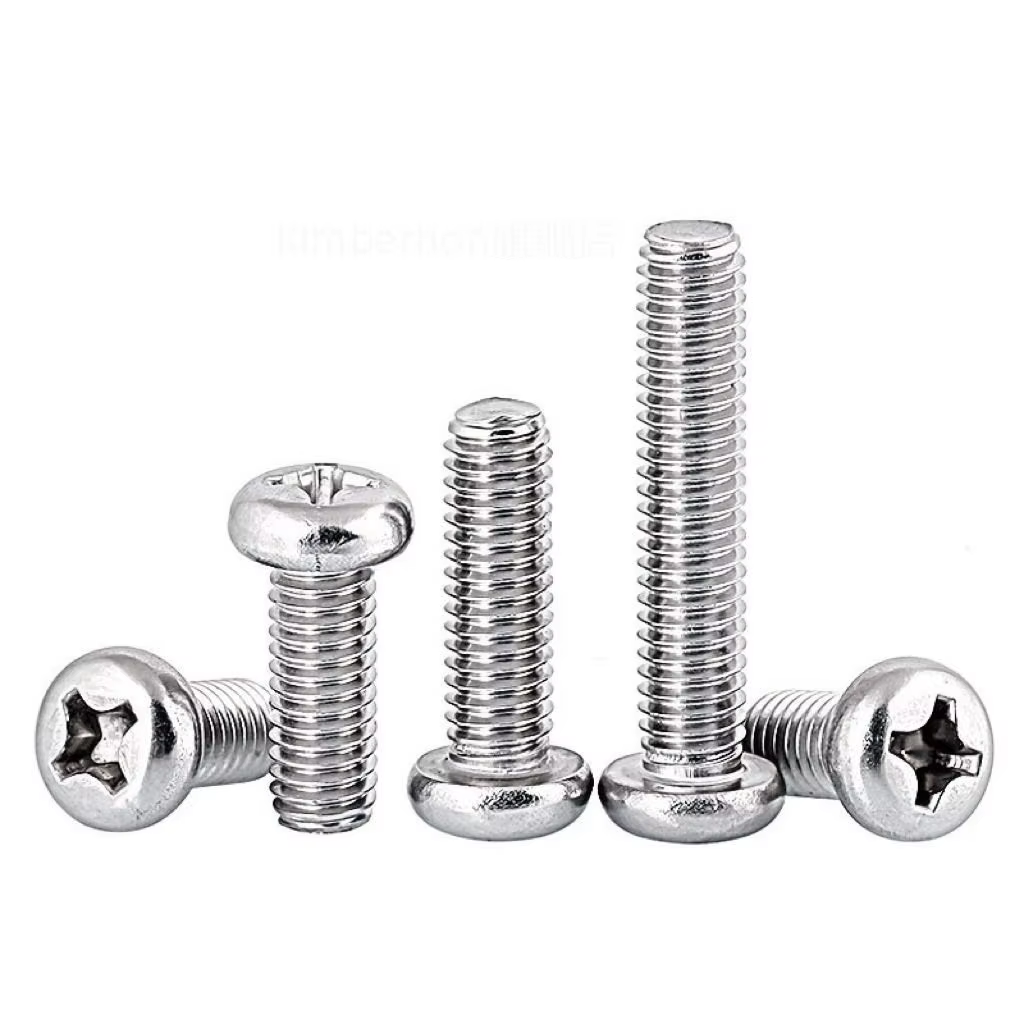
The Real Reason “Stainless” Isn’t Always Stainless
Walk onto any production floor in medical device manufacturing or food processing, and you’ll see stainless steel everywhere. But here’s the catch—stainless steel isn’t automatically corrosion-resistant right out of the machining center. The alloy contains chromium, sure, but the protective chromium oxide layer that gives stainless its name gets disrupted during cutting, grinding, and handling. Machining operations introduce free iron particles from tooling onto the surface, and those particles become corrosion initiation sites.
A passivation treatment solves this by chemically dissolving that embedded free iron without attacking the underlying alloy. The result? A clean, chromium-enriched surface that can reform its protective oxide layer uniformly. That’s why passivated stainless steel screws are essentially non-negotiable in environments where equipment sees repeated cleaning cycles, chemical exposure, or direct contact with consumables.
What Passivation Actually Does to a Screw
The mechanism is straightforward but precise. Passivation uses either nitric acid or citric acid to remove surface contaminants. Nitric acid, the traditional approach, aggressively dissolves iron while oxidizing the chromium-rich surface. Citric acid works through chelation—it binds iron ions and carries them away.
Both methods achieve the same outcome: free iron is gone, and the surface now has a higher chromium-to-iron ratio than the bulk alloy. Once that clean surface hits oxygen, the passive film reforms spontaneously as chromium oxide (Cr₂O₃), about one to three nanometers thick. This layer is chemically stable, self-healing, and invisible to the naked eye.
What passivation does not do is change the screw’s dimensions. It’s a chemical process, not a mechanical one, so critical thread profiles and fit tolerances remain intact. That matters enormously for fasteners in precision assemblies where every micron counts.
Why Medical and Food Equipment Demand Passivated Fasteners
Medical and food processing environments share a brutal combination of requirements: frequent wet cleaning, exposure to sanitizing chemicals, temperature cycling, and zero tolerance for contamination.
Take sterilization cycles, for instance. Autoclaving subjects screws to steam, heat, and pressure repeatedly. An unpassivated screw with embedded iron particles will develop rust spots over time—and rust means pitting, which means crevices where bacteria can hide. Regulatory bodies don’t look kindly on that. Passivation removes the root cause before it becomes a problem.
Then there’s the chemical exposure. Food processing lines use caustic cleaners and acidic rinses. Medical instruments see disinfectants that would challenge lesser materials. A properly passivated screw maintains its corrosion resistance through all of it.
And here’s something that doesn’t get talked about enough: passivation produces a cleaner, more uniform surface finish. That smoothness means fewer places for organic matter to cling during cleaning. In both medical and food settings, that’s a direct line to better hygiene outcomes.
The Standards That Separate Compliant Parts from the Rest
Passivation isn’t a “nice to have” in these industries—it’s specified. ASTM A967 is the primary standard for chemical passivation treatments for stainless steel parts. It covers both nitric and citric acid methods and includes verification tests like water immersion, high humidity, salt spray, copper sulfate, and potassium ferricyanide-nitric acid tests.
For fasteners specifically, ISO 16048 addresses passivation of corrosion-resistant stainless steel fasteners. Meeting these standards isn’t about checking a box—it’s about ensuring that every lot performs identically in the field.
A typical requirement might call for passivation per ASTM A967 followed by a salt spray test to verify corrosion resistance. Parts that pass that test have demonstrated they can withstand the kind of corrosive exposure they’ll see in service.
A Real-World Scenario: The Dairy Processor That Learned the Hard Way
A dairy processing facility in the Upper Midwest had been using standard stainless steel screws on their filling line for years. No passivation—just off-the-shelf hardware. Everything seemed fine until routine inspection revealed pitting around screw heads on the filling nozzles. The pits were trapping milk residue, and despite aggressive cleaning protocols, the facility started seeing sporadic contamination flags in their quality checks.
The fix wasn’t complicated: replace every fastener on the wet side of the line with passivated 316 stainless screws. The difference showed up within weeks. No more pitting around fastener heads. Cleaning validation passed consistently. The operations manager later noted that the upfront cost difference per screw was negligible compared to the downtime and revalidation costs they’d been facing.
When Passivation Isn’t the Whole Answer
Passivation is powerful, but it has limits. It only works on stainless steel and certain high-chromium alloys—aluminum, copper alloys, and carbon steel see no benefit. It also requires absolutely clean parts before treatment; any residue or dirt trapped during passivation can compromise the entire batch.
And passivation doesn’t make stainless steel immune to corrosion. Extreme environments with chlorides or seawater can still cause issues over time. It significantly slows corrosion, but it doesn’t eliminate the possibility entirely.
For medical and food equipment, though, passivation remains the baseline requirement—not because it’s perfect, but because it’s the most effective, dimensionally neutral way to ensure stainless steel performs as intended.
The Bottom Line
Passivation treatment turns a screw from a potential contamination risk into a reliable, long-service-life component. The process removes the free iron that machining leaves behind, restores the passive chromium oxide layer, and does it without altering critical dimensions. For medical and food equipment, where hygiene and corrosion resistance aren’t optional, passivated fasteners aren’t a premium upgrade—they’re the standard.
Manufacturers like HXJ routinely specify passivation for stainless steel components destined for regulated environments, understanding that the treatment bridges the gap between “stainless” in name and “stainless” in performance.
Table of Contents
- The Real Reason “Stainless” Isn’t Always Stainless
- What Passivation Actually Does to a Screw
- Why Medical and Food Equipment Demand Passivated Fasteners
- The Standards That Separate Compliant Parts from the Rest
- A Real-World Scenario: The Dairy Processor That Learned the Hard Way
- When Passivation Isn’t the Whole Answer
- The Bottom Line