 EN


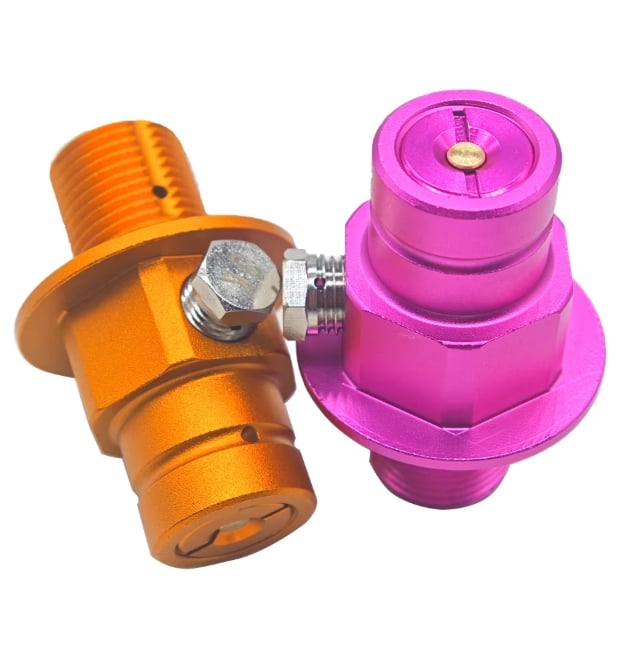
The Pink Seal vs. Blue Seal: A Visual Shortcut That Actually Works
SodaStream changed its cylinder connection system a few years back, and the transition has created a steady stream of confusion for home carbonation users. The older screw-in cylinders use a TR21-4 trapezoidal thread—a standard that's been around for years. The newer quick connect system uses a pink seal on the cylinder neck and a lever-operated clip mechanism on the machine.
The visual cue is simple: pink seal means quick connect; blue or no colored seal means screw-in. But that's just the starting point. The real question is what to do when the cylinder in hand doesn't match the machine on the counter.
How the TR21-4 Thread Became the Industry Default
The TR21-4 thread is a trapezoidal thread form with a 21 mm nominal diameter and a 4 mm pitch. It's been the default connection for threaded CO2 cylinders used in home carbonation for years. The thread form is robust enough to handle the pressures involved—typically around 50 to 60 bar at room temperature—and the geometry provides a self-centering action during engagement that reduces the risk of cross-threading.
The screw-in system relies on a seal washer at the base of the thread. When the cylinder is tightened into the machine, the washer compresses against a mating face, creating the gas-tight seal. Over-tightening can damage the washer; under-tightening leaves a leak path. It's a simple system that works well when the user applies reasonable torque.
What Quick Connect Changed About the Connection
The quick connect system eliminated the threaded engagement entirely. Instead of twisting the cylinder into place, the user pushes the cylinder into the machine until a spring-loaded mechanism clicks. A lever on the back of the machine secures the connection.
The sealing mechanism in the quick connect system is different too. Instead of a compression washer, the system uses an O-ring that seals radially against the cylinder neck. This design reduces the risk of user error—no guesswork about how tight is tight enough. But it also means the cylinder and machine are paired in a way that doesn't allow for the same level of cross-compatibility.
The Adapter Solution: What Works and What Doesn't
Adapters exist to bridge the two systems. A screw-in to quick connect adapter screws onto a threaded cylinder and converts the interface to the quick connect profile. These adapters typically thread onto the TR21-4 male thread of the cylinder and present a quick-connect compatible interface on the other end.
What these adapters do:
Allow older threaded cylinders to be used with newer quick connect machines.
Preserve the functionality of the cylinder without modification.
Provide a cost-effective alternative to replacing existing cylinders.
What they don't do:
They don't change the pressure rating of the cylinder.
They don't convert a quick connect cylinder for use with a screw-in machine (adapters exist for this direction too, but they're less common).
They don't address compatibility issues with the machine's internal sealing surfaces.
When an Adapter Adds Complexity Instead of Solving It
A service center in the Pacific Northwest reported that roughly 15% of the adapter-related returns they processed came from users who installed the adapter incorrectly—either by failing to replace the sealing washer on the threaded side or by over-torquing the adapter into the machine. In one case, a user tightened a screw-in adapter so far that the adapter body bottomed out against the machine's internal valve, preventing the gas from flowing at all.
The lesson: adapters are mechanical interfaces, not magic fixes. They require correct installation, proper sealing elements, and an understanding of how the gas path flows through the assembly. A missing or damaged O-ring on the adapter means CO2 leaks into the machine cabinet rather than into the water bottle.
Material Differences That Affect Longevity
The threaded interface on a screw-in cylinder sees mechanical stress every time the cylinder is installed or removed. Brass is the dominant material for these adapters because it machines well and provides good thread lubricity. Stainless steel offers higher strength but is more expensive to machine.
For quick connect adapters, the critical wear points are different. The spring-loaded retention mechanism and the radial O-ring seal see repetitive compression cycles. An adapter made from a material that lacks sufficient dimensional stability can develop wear patterns that affect the seal over time.
| Feature | Screw-In System | Quick Connect System |
|---|---|---|
| Connection method | Threaded (TR21-4) | Spring-loaded clip + lever |
| Seal type | Compression washer | Radial O-ring |
| Visual identifier | Blue seal or no colored seal | Pink seal |
| User action | Twist until snug | Push until click, then lock lever |
| Common failure mode | Overtightened washer | Worn O-ring or damaged clip |
Making the Call: Which System Fits Your Setup
The choice between screw-in and quick connect isn't really a choice for most users—it's determined by the machine they already own. The more practical question is whether to invest in an adapter or replace cylinders outright.
For occasional use, an adapter makes financial sense. For heavy users who go through multiple cylinders per month, the convenience of quick connect—no twisting, no torque guesswork—might justify the cost of transitioning to the newer system. Either way, the adapter is a bridge, not a permanent solution.
HXJ produces both screw-in and quick-connect CO2 adapters with thread geometries verified against TR21-4 gauging standards and O-ring grooves machined to specified depths and widths for consistent seal compression.
Table of Contents
- The Pink Seal vs. Blue Seal: A Visual Shortcut That Actually Works
- How the TR21-4 Thread Became the Industry Default
- What Quick Connect Changed About the Connection
- The Adapter Solution: What Works and What Doesn't
- When an Adapter Adds Complexity Instead of Solving It
- Material Differences That Affect Longevity
- Making the Call: Which System Fits Your Setup