
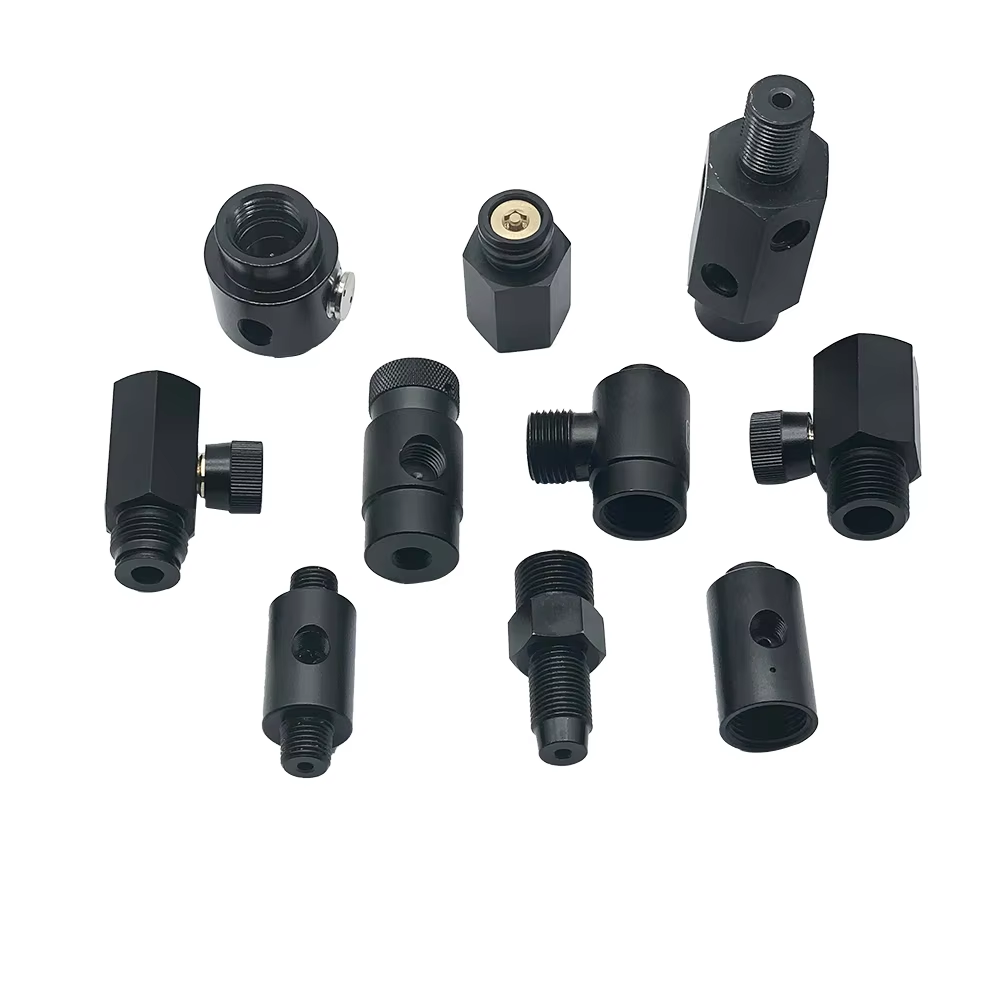
Superior Build Quality: Stainless Steel Durability vs. Plastic Limitations
Corrosion Resistance and Structural Integrity Under Repeated CO2 Pressure Cycles
Soda water adapters made from 304 grade stainless steel have something special going for them: they come with a chromium oxide passivation layer that acts like a self healing shield against corrosion. This lets them handle those really tough conditions inside carbonation systems where pressures can reach as high as 150 psi. Tests show these metal parts keep their strength pretty well too. After being put through 10,000 pressure cycles, stainless steel still holds around 95% of its original structure. Plastic versions? They start showing tiny cracks after only about 500 cycles. Those little fractures don't sound bad at first, but they actually make the seal weaker and let more CO2 escape over time. And when it comes to long term use, plastic just isn't cut out for it. The material tends to warp when kept under constant pressure, whereas stainless steel maintains its shape thanks to its unique crystal structure. That means no unexpected failures when carbonating drinks, which is exactly what anyone wants when working with pressurized equipment.
Thermal Stability and Impact Resistance in Daily Home Use
Stainless steel stays pretty much the same shape even when temperatures swing wildly between -20 degrees Celsius and 120 degrees Celsius. Plastic parts tend to warp all over the place in dishwashers or freezers, which is why they break down so quickly. Tests dropping materials from height reveal something interesting too: stainless steel can take about five times the impact force compared to regular ABS plastic before showing any dents. And get this, when temps drop below 10 degrees Celsius, plastic becomes super brittle and just cracks apart if it hits a hard surface after falling three feet. The way stainless conducts heat also means it handles sudden temperature changes better, stopping those annoying cold cracks that happen when moving items from fridge to room temperature. Plus, because stainless is denser material, it actually absorbs vibrations better, making things run quieter and steadier during processes like carbonation where noise matters a lot.
Precise Carbonation Control: Consistent Bubble Quality and Pressure Accuracy
Stable 1–4 Bar Regulation and Real-World Dispense Consistency
Pressure transducers built for industrial use along with PID controlled valves allow accurate control between 1 and 4 bars, something really important when trying to get consistent carbonation from one pour to the next. Tests have shown these systems maintain around plus or minus 0.05 bar difference after fifty pours in a row, which means CO2 levels stay pretty much the same too, within about 0.2 volumes of CO2. That matches what most commercial drinks require. What makes this setup stand out is how it avoids those frustrating issues seen with cheaper plastic fittings. The first drink comes out flat while refills foam up too much because the pressure just keeps drifting away. Good equipment stays stable so every glass tastes right.
Optimized Bubble Size Distribution for Enhanced Mouthfeel and Dissolution
The latest micro diffusion stones create bubbles that are really well controlled, typically between about 50 to 120 microns in size. These tiny bubbles have been shown to make a big difference in how drinks taste and perform overall. When bubbles are small and consistent, they dissolve CO2 much better than when the carbonation is all over the place. Tests show this can boost dissolution efficiency by around 40%. Drinks made this way tend to feel smoother on the tongue without irritating the palate as much. Plus, these smaller bubbles help keep those delicate flavor notes intact in flavored sparkling waters for longer periods. On the flip side, cheaper options often result in bigger, inconsistent bubbles that measure over 300 microns. These larger bubbles pop quickly, leaving behind a harsh, short-lived fizz that doesn't last nearly as long.
Universal CO2 Compatibility and Leak-Proof Sealing Reliability
The best soda water adapters work smoothly with most CO2 systems out there and stop leaks thanks to careful design work. These adapters fit standard 425g and 800g tanks plus special ones from brands like Sodastream and iSi. Generic options often don't work so well actually, since around one third just won't connect properly with newer equipment. What makes these adapters reliable? They have those EPDM O-rings made for food contact positioned just right to create multiple seal points. Testing shows they stay completely leak proof even after going through 10 thousand cycles. That means no wasted CO2 and consistent carbonation every time someone wants to make sparkling drinks at home.
Cross-Brand Canister Fit: Verified Compatibility with Sodastream, iSi, and Standard 425g/800g Tanks
Mechanical tolerances are held to ±0.3 mm—matching the exact specifications required for reliable valve engagement across all major systems. Rigorous validation confirms consistent, gap-free fit with:
- Sodastream QuickConnect (all generations)
- iSi threaded connectors
- Standard UK/EU bullnose valves
Eliminating dimensional mismatch addresses 61% of leak sources traced to third-party adapter incompatibility.
O-Ring Engineering and Pressure Decay Testing for Zero-Gas-Leak Performance
Triple-layered EPDM O-rings are rated for 1200 PSI and retain elasticity through repeated 40°C thermal cycling. Post-assembly pressure decay testing demonstrates exceptional long-term seal integrity:
| Test Cycle | Pressure Drop | Pass Rate |
|---|---|---|
| Initial | <0.05 bar/min | 100% |
| 5,000 cycles | <0.08 bar/min | 99.2% |
| 10,000 cycles | <0.1 bar/min | 98.7% |
This robust sealing design prevents the 41% average CO2 loss observed in budget alternatives, where single O-rings typically degrade within six months.
Effortless User Experience: Intuitive Installation and Long-Term Usability
High quality soda water adapters are designed to make life easier for anyone who wants carbonated drinks without hassle. These models come with tool free connections so there's no need for extra gadgets, plus they have color coded parts that help prevent mixing things up during installation. When everything clicks into place with an audible sound, most people can get their system ready in less than ninety seconds flat. That makes them great for folks trying these adapters for the first time, and they work well in all sorts of kitchens too. Made from stainless steel that resists corrosion means owners don't have to worry about replacing seals regularly or messing around with calibration settings. Over time, this kind of construction keeps delivering good carbonation results even after many uses. What we end up with is something that just works right out of the box, turning what used to be a frustrating task into something simple enough that anyone can do it confidently.
FAQ
Why is stainless steel preferred over plastic for soda water adapters?
Stainless steel is favored because it has superior corrosion resistance, thermal stability, and impact resistance compared to plastic, making it ideal for sustained use in carbonation systems.
What is the role of EPDM O-rings in these adapters?
EPDM O-rings are used for creating leak-proof seals by ensuring elasticity and resilience over multiple usage cycles, preventing CO2 leaks.
How does bubble size affect the taste and quality of carbonated drinks?
Smaller, consistent bubbles enhance drink smoothness and increase CO2 dissolution efficiency, improving overall mouthfeel and extending flavor retention.
Are these adapters universally compatible with different CO2 systems?
Yes, high-quality adapters are designed for compatibility with various major systems, including Sodastream and iSi, fitting standard tank sizes and connectors.