
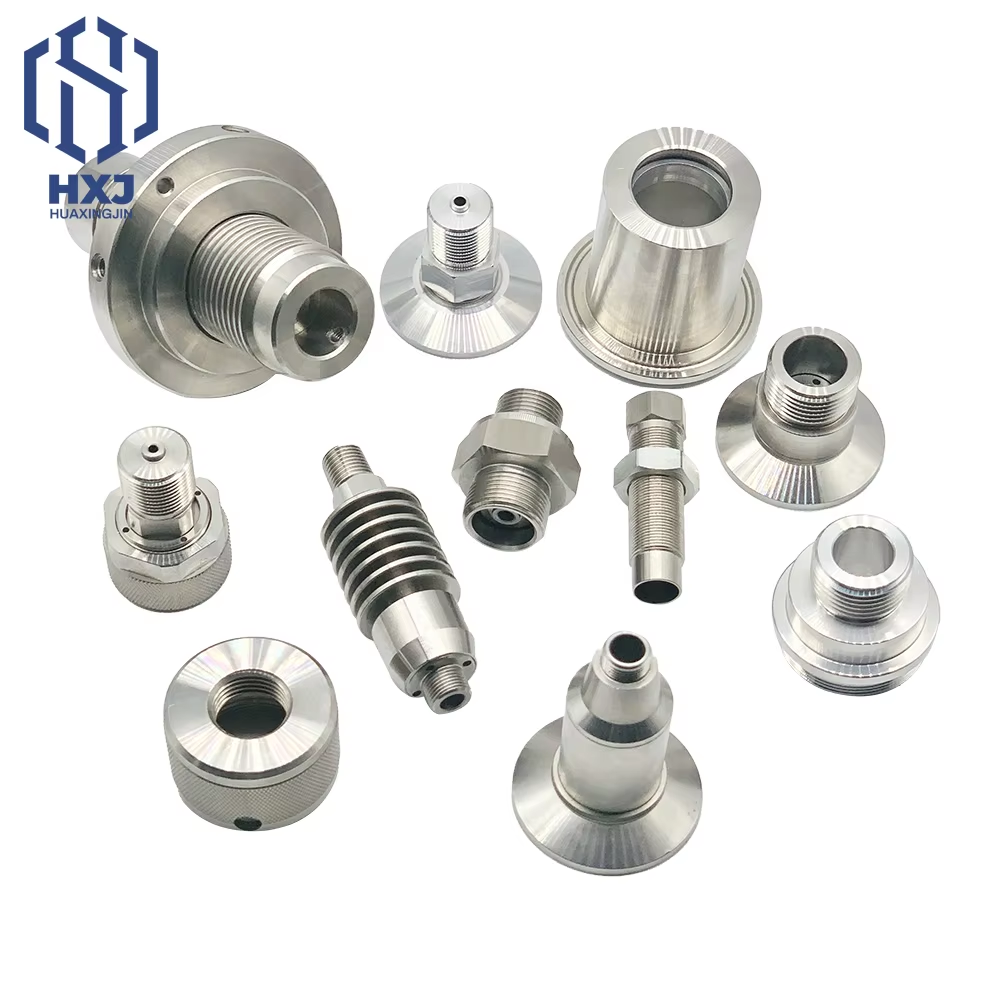
CNC Machining Ensures Sub-Thousandth-Inch Accuracy for Tight-Tolerance Hardware
Tight tolerance requirements in precision hardware (e.g., ±0.001–±0.002 inches)
The aerospace and medical device industries need parts made to incredibly tight specifications, sometimes down to just ±0.001 inch. These are tiny margins where getting the dimensions right makes all the difference between something working properly or failing completely. Take jet engine turbines for instance—they have to be manufactured with extreme accuracy because any slight mistake can lead to serious problems during flight. Similarly, when making surgical implants or those small stents used in brain procedures, even the tiniest deviation might affect how well they function inside the body or worse, pose safety risks. According to recent data from 2023, nearly nine out of ten hardware failures in important systems actually happened because measurements were off by more than ±0.002 inch. This shows clearly that controlling dimensions at such fine levels isn't some nice-to-have feature but absolutely essential for these applications.
How CNC machining achieves and validates dimensional consistency via closed-loop control and probe-based inspection
The precision of CNC machining comes from several layers working together in real time. Modern machines use high resolution servos and encoders that create what's called a closed loop system. This setup constantly checks where the cutting tool actually is versus where it should be, making adjustments on the fly for things like heat expansion, vibrations, and tiny mechanical shifts during operation. Once the part is machined, special touch probes check key measurements right there on the machine table instead of moving everything around. Before anything gets shipped out, parts go through final checks with Coordinate Measuring Machines (CMMs). These advanced devices can measure down to fractions of a thousandth of an inch thanks to their specially calibrated tips and super stable granite platforms. When all these steps are combined properly, manufacturers typically see around 99.98% accuracy in their finished products, which makes a huge difference when tolerances matter most.
CNC Machining Delivers Unmatched Repeatability for High-Volume Precision Hardware Production
Automation-driven process stability: G-code consistency, tool wear compensation, and in-cycle verification
Getting consistent results when making lots of parts really depends on automation, not just how fast things go. The G-code programs basically follow the same path over and over again for each piece, which takes out all that human factor during setup and actual cutting. When tools start wearing down, the system automatically tweaks how fast they move and how deep they cut, keeping surfaces smooth and dimensions right even after thousands of parts are made. There's also something called in-cycle verification that checks important features halfway through production. If anything starts going off track by more than 0.001 inch, it kicks in automatic fixes. All these systems work together to stop errors from building up and prevent those annoying tolerance problems. This matters a lot in industries like aviation components or medical device manufacturing, where tiny variations can make whole batches of products unusable and cost companies big time.
Real-world validation: 99.98% part-to-part repeatability in aerospace hardware batches (SME 2023 Benchmark Report)
The Society of Manufacturing Engineers did a big study looking at half a million aerospace parts, and what they found about reliability was pretty impressive. When making turbine mounts in batches of around 15,000 units, these components hit nearly perfect measurements - about 99.98% accuracy across those 187 really important features. The automated systems put in place cut down on mistakes made by humans by almost 90% compared to when people had to do everything manually. This means manufacturers can scale up production while still keeping that crucial consistency needed for aircraft safety. And when we talk about parts like landing gear actuators or fuel system manifolds, this kind of repeatable quality isn't just good for efficiency. It's actually essential for meeting FAA Part 25 standards and getting DO-178B/DO-254 approvals, which are pretty much table stakes in the industry these days.
Multi-Axis CNC Machining Enables Complex Geometries Critical to Advanced Hardware Functionality
From 3-axis to simultaneous 5-axis CNC: geometric freedom, reduced setups, and improved surface integrity
When using simultaneous 5-axis CNC machining, designers can achieve shapes that would be impossible with standard 3-axis systems. The machine rotates both the cutting tool and the part being worked on across five different axes at once. This allows manufacturers to reach those tricky areas like complex curves, undercuts, and natural looking forms without having to constantly reposition the workpiece. What this means is fewer times when operators need to take the part out of the machine and set it up again. Each time they do that, small alignment issues can creep in, which affects how accurate the final dimensions are. For things like medical implants where precision matters a lot (think about needing to stay within 0.0005 inches tolerance on curved surfaces), studies show that 5-axis machines produce surfaces that are about 60-65% better quality compared to doing the job in stages with regular 3-axis equipment. The reason? The cutting tool stays engaged continuously during operation, so there's less vibration or chatter happening. And that smooth cutting action helps maintain those microscopic finishes needed for bones to properly integrate with implants and for fluids to flow correctly through devices.
Case study: Monolithic 5-axis titanium hinge for medical robotics — eliminating 7 welds, enhancing reliability and sterilizability
A company making surgical robots recently reworked their titanium joints. These were once made up of seven separate welded pieces but now come as one solid piece thanks to 5-axis computer numerical control machining. Getting rid of those welds means no more problems with heat affected areas or tiny cracks forming, which actually makes the whole thing 40% stronger according to tests under ASTM F2885 standards for fatigue resistance. The smooth shape of these new parts works better in autoclaves too. Sterilization processes shed way fewer particles now, down by more than 90%. When it comes to medical implants classified as Class III, this single piece construction passes all the ISO 13485 cleanliness checks required for such devices. Plus, manufacturers find it much easier to document everything needed for FDA approval since there's just one component instead of multiple parts to track through the design history files. This shows what modern CNC technology can achieve when balancing performance improvements with meeting strict regulatory demands.
Material and Machine Specialization in CNC Machining Support Diverse Precision Hardware Applications
CNC machining today does more than handle complex shapes it really shines when working with specific materials and getting machine tools just right. Take titanium alloys used in aerospace parts like hinges, medical grade PEEK plastic for those tiny spinal cage implants, or silicon nitride ceramics found in satellite components. Each material needs different settings on the machine. Spindle speed matters, coolant application has to be spot on, and the way the cutting path is programmed can mean the difference between success and problems like layers peeling off, metal getting too hard during processing, or cracks from heat buildup. Specialized machines matter too. Turbine blades need 5 axis milling equipment, while those super small vascular guidewires require Swiss style lathes capable of handling diameters under half a millimeter. And don't forget about mill turn centers that make those complicated hydraulic fittings all in one setup. All this attention to detail allows manufacturers to hit tolerances down to 0.0005 inches, achieve surface finishes better than 0.2 microns roughness average, and meet exact requirements whether its resisting saltwater corrosion in boat propellers or ensuring compatibility with human tissue in skull implants across all sorts of high precision hardware applications.
FAQ
What is the importance of tight tolerance in CNC machining?
Tight tolerance in CNC machining is critical for industries like aerospace and medical devices because any slight deviation can lead to functional failures or safety risks. Ensuring precision ensures that parts function correctly and safely.
How does CNC machining achieve such high levels of accuracy?
CNC machining uses high-resolution servos, encoders, and closed-loop systems to constantly monitor and adjust the cutting tool's position. This ensures dimensional consistency and precision.
What are the benefits of 5-axis CNC machining over 3-axis?
5-axis CNC machining provides greater geometric freedom, reduces the need for multiple setups, and improves surface integrity, making it possible to produce complex shapes more precisely and efficiently.
Why is material specialization important in CNC machining?
Different materials require specific machine settings, such as spindle speed and coolant application, to achieve desired precision and avoid manufacturing issues like heat buildup or material cracking.
Table of Contents
- CNC Machining Ensures Sub-Thousandth-Inch Accuracy for Tight-Tolerance Hardware
- CNC Machining Delivers Unmatched Repeatability for High-Volume Precision Hardware Production
- Multi-Axis CNC Machining Enables Complex Geometries Critical to Advanced Hardware Functionality
- Material and Machine Specialization in CNC Machining Support Diverse Precision Hardware Applications
- FAQ